Before Adding a Warehouse, Maximize the One You Have
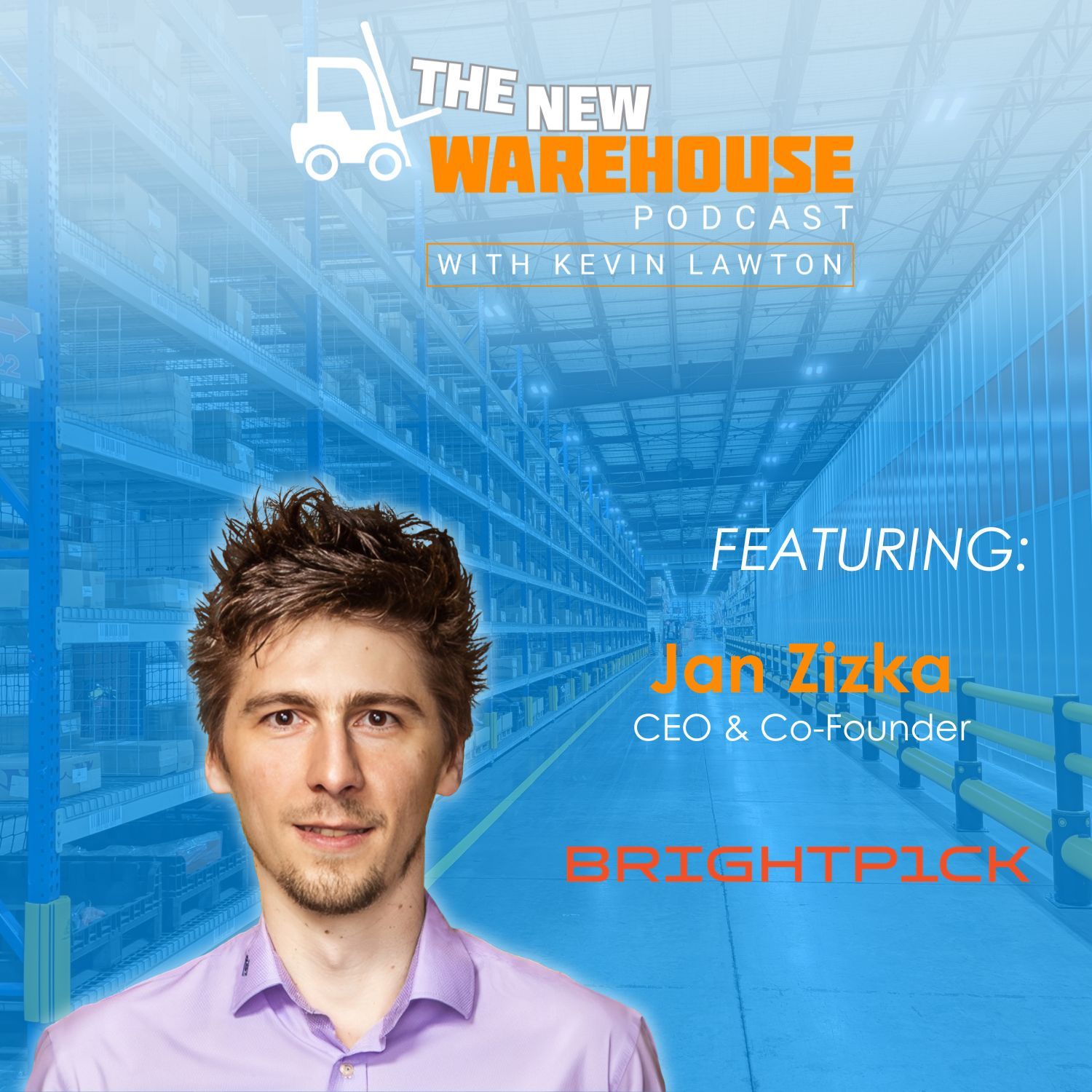
Before you start looking for your next warehouse, have you asked how much more you can get from the one you already have? Welcome to this episode of The New Warehouse Podcast. Kevin sits down with Jan Zizka, CEO and co-founder of Brightpick. Together, they discuss what it takes to make automation work and maximize capacity in the warehousing industry.
Brightpick combines mobile robots, AI, and robotic manipulation to automate picking. Jan covers the trade-offs warehouse operators face, from flexibility and throughput to ROI and exception handling. He also makes a strong case for getting more out of the building you already have before adding another one.
Automation Still Has to Pay for Itself
Warehouse technology can get impressive quickly. Jan keeps bringing the conversation back to a much simpler question: does it make financial sense?
“And then number one metric we optimize is ROI for the customer, period.” For Brightpick, that includes labor, space, throughput, and the infrastructure needed to support the system.
The right answer also depends on what the operation needs most. Jan describes the choice as “ultimate flexibility versus ultimate throughput.” AutoPicker was built around flexibility and easier deployment. GridPicker goes after much higher throughput and storage density. At some point, those goals pull in different directions. As Jan puts it, “You cannot have ultimate flexibility for a warehouse doing twenty thousand lines per hour.”
How Much More Can This Building Handle?
Jan says a common problem shows up as companies grow. “They have one given warehouse, but ultimately they saturate that given system.” He estimates that somewhere between 30% and 50% of Brightpick customers struggle with scaling an existing warehouse.
Adding another building is one answer, but it is not a small one. It can mean another management team, duplicated systems, more inventory decisions, and a new layer of transportation planning.
That is the problem GridPicker is meant to address. “GridPicker should be able to inflate the warehouse.” Jan follows that with, “It’s probably two to three X.” In his example, adding another warehouse might cost around $50 million, while increasing capacity in the current facility could be closer to $10 million to $15 million.
Before asking where the next warehouse should go, ask how much more capacity can be extracted from the warehouse you already have.
The Last Few Percent Are the Hard Part
Piece-picking automation only matters if it can handle enough of the actual SKU mix. Jan is pretty direct about that.
“Imagine you can pick 20% of the SKU portfolio, like probably really doesn’t make sense, you know?” Brightpick generally looks for at least 50% applicability. Jan says pharma can reach 95% to 99%, while beauty and drugstore products can get close to 90%. With several suction tools, he says e-grocery can reach roughly 90% to 95% of toteable items.
Then come the oddballs. Damaged packaging. Items wedged against a tote wall. Products stuck together or tangled. “The tail of edge cases is kind of infinite.” Jan estimates that up to 5% of picks may have something unusual about them.
Brightpick’s answer is simple: “the robot struggles to pick, so it travels to the nearest human.” The exception goes to the worker, not the worker chasing the exception.
Jan thinks the industry ultimately needs to make automation easier to repeat. “We have to have almost like a template of a warehouse. When the entire template works well, it is proven. Copy-paste, let’s go.”
Key Takeaways
- Labor savings are only part of the ROI equation. Space, throughput, infrastructure, and long-term value matter too.
- Brightpick says GridPicker can increase warehouse throughput by two to three times.
- Automation has to cover enough of the SKU mix to matter. Brightpick generally looks for at least 50% pickability.
- Jan estimates up to 5% of picks may involve something unusual.
- Brightpick says most deployments no longer require training a new neural network for each site or product mix.
Listen to the episode below and leave your thoughts in the comments.
Guest Information
For more information on Brightpick, click here.
To connect with Jan Zizka on LinkedIn, click here.
For more information about maximizing warehouse capacity, check out the podcasts below.
Unit AI: They Don’t Sell Robots, They Sell Capacity
Physical AI Orchestration for Warehousing Starts with Software
The New Warehouse Amazon List: 7 Rules for Smarter Warehouse Automation