Physical AI Is Taking on Warehouse Variability
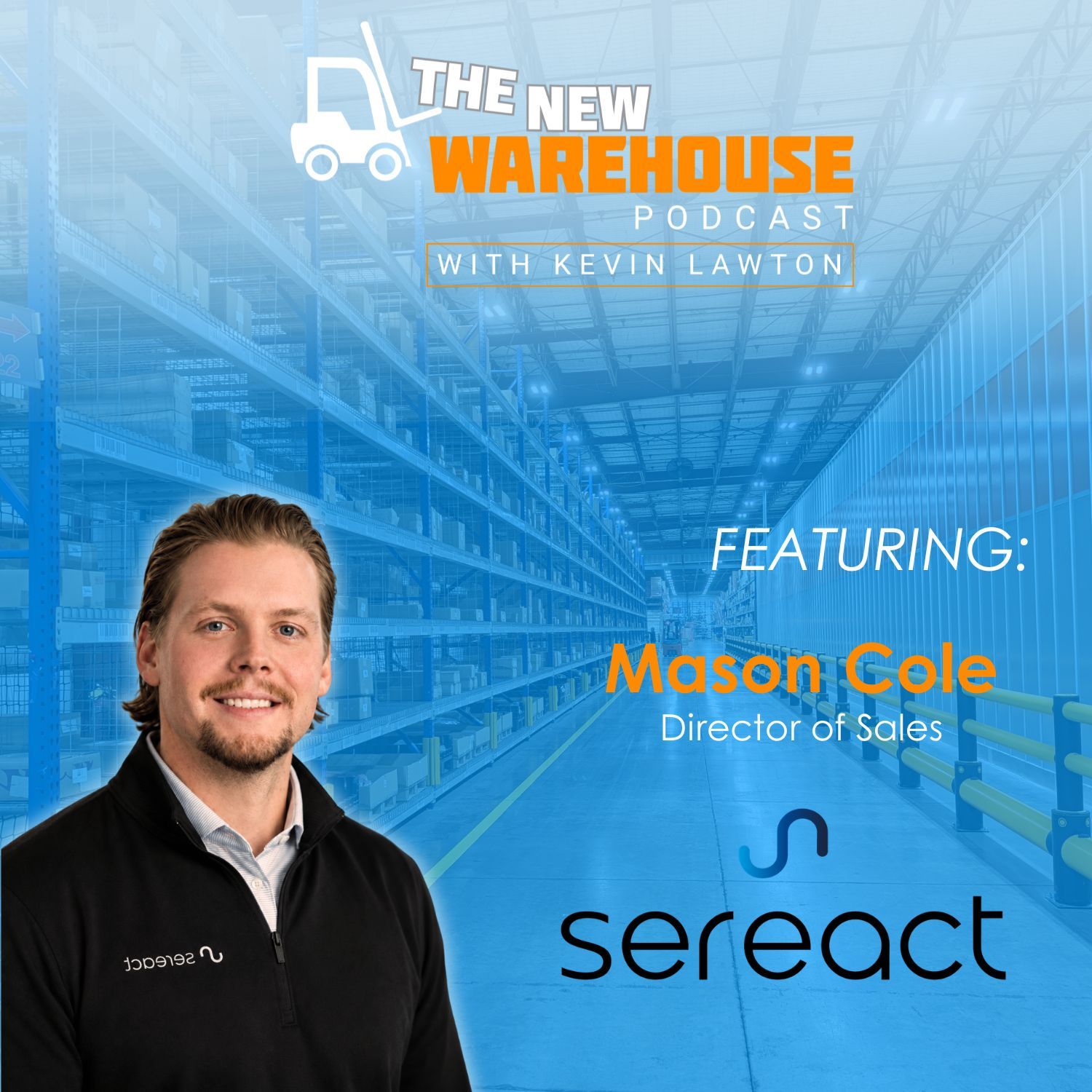
Warehouse automation has historically worked best in predictable environments. Physical AI could change that. On this episode of The New Warehouse Podcast, Kevin sits down with Mason Cole, Director of Sales for North America at Sereact.
Sereact develops AI software and robotic systems designed to perceive, reason, and adapt inside warehouse operations. Mason explains zero-shot picking, AI-powered vision, and dual-arm robotics. More importantly, he shares how warehouse leaders should evaluate emerging technology without getting caught up in the hype.
How Physical AI is Moving Automation Beyond Predictable Work
Traditional automation depends heavily on consistency. Physical AI is designed for something warehouses have plenty of: variability.
“Most traditional automation was built around predictability,” Mason says physical AI allows machines to perceive what is happening, make decisions, and adjust in real time. “Variability in a warehouse, it’s going to happen. You know, predictability is very, very hard.”
Sereact’s Cortex platform puts that idea into practice. Its zero-shot picking technology can handle products without previously seeing or training on each SKU. Mason says some customers have six-figure SKU counts inside a single AutoStore system. Sereact has also completed more than one billion production picks. Its pick-and-place systems can reach 650-plus units per hour from one station.
Taking on Work That Was Hard to Automate
The next opportunity may be processes that traditional robotics struggled to handle. Returns are one example. A fashion warehouse may have 30 to 50 people managing returned goods throughout the day.
“We wanna go after applications that typically are almost impossible to automate because they require human-level manipulation, human-level perception, human-level reasoning.”
Sereact is applying dual-arm systems to unpack, inspect, refold, and repackage returned apparel. Lens, its vision system, handles the quality inspection before an item returns to inventory.
The technology can also recognize failure. “It’ll actually self-correct and attempt the task again until it gets it correct.” That ability matters because returns rarely arrive in a predictable condition. The system has to respond to what is actually in front of it.
Start With the Problem, Not the Robot
For warehouse leaders, Mason’s advice is simple: resist starting with the technology.
“Start with your biggest operational problems, not the desire to implement a technology, right?” That means looking first at expensive processes, staffing challenges, ergonomics, error rates, downtime, and cost per unit. Without that baseline, it’s hard to know whether automation actually improved anything.
Testing also needs to reflect reality. “A successful demo is not the same thing as a successful deployment.” Whenever possible, operators should test actual products, packaging, order profiles, and expectations in a real-world environment. Additionally, look beyond advertised peak speed toward sustained throughput, uptime, recovery, integration, and internal support requirements.
Mason sums up the approach well: “Start narrow, measure aggressively, and build for scale.”
Key Takeaways
- Physical AI is increasingly aimed at warehouse variability, not just repetitive motion.
- Sereact says its technology has completed more than one billion production picks.
- Zero-shot picking can handle new SKUs without retraining for every item.
- Returns show where AI-driven perception and manipulation could open new automation opportunities.
- Real products, sustained throughput, and measurable operating results matter more than an impressive demo.
Listen to the episode below and leave your thoughts in the comments.
Guest Information
For more information on Sereact, click here.
To connect with Mason Cole on LinkedIn, click here.
For more information about physical AI, check out the podcasts below.
Physical AI Orchestration for Warehousing Starts with Software