Logistics Hub Development: How Franklin County Became a Powerhouse
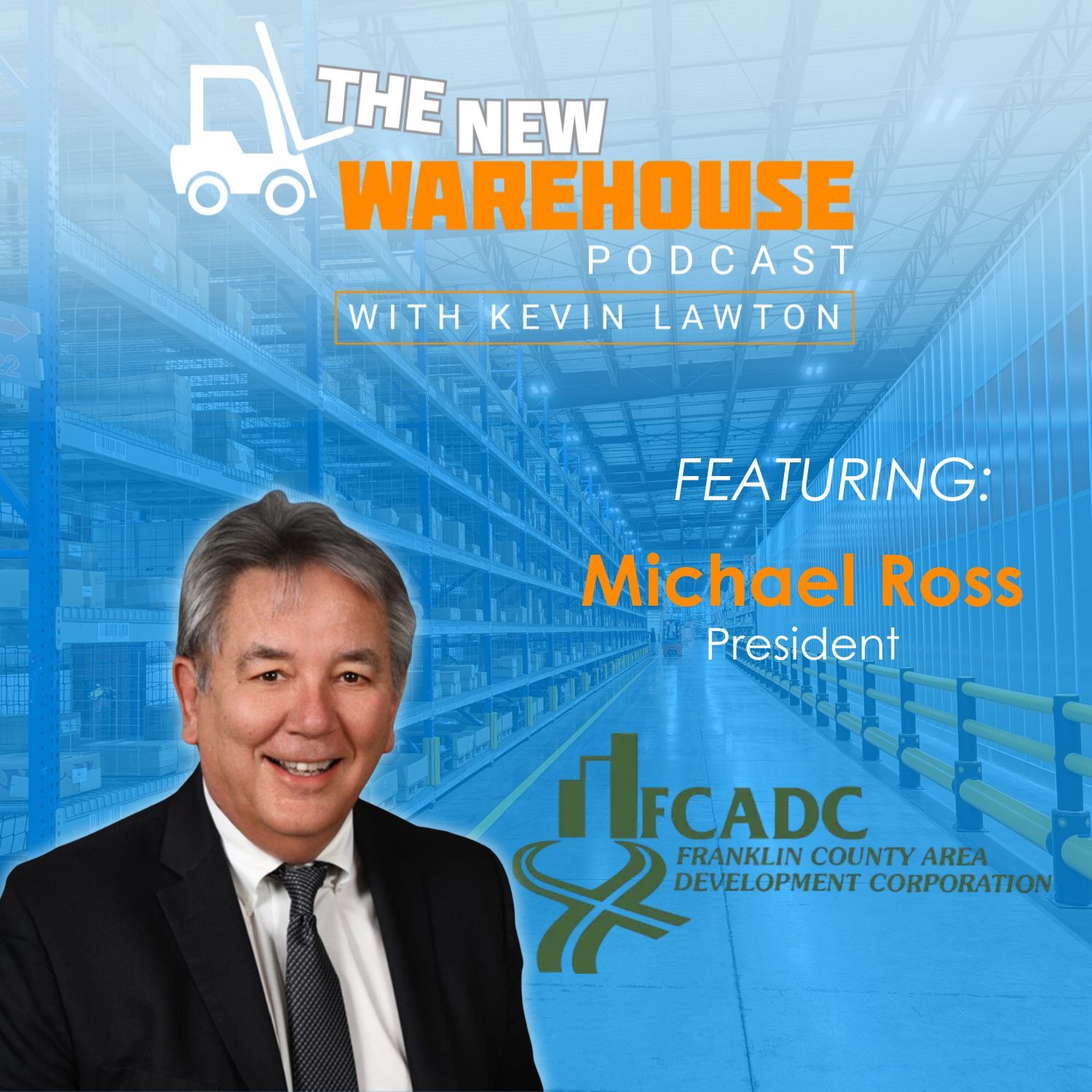
In this episode of The New Warehouse Podcast, Kevin chats with Mike Ross, President of the Franklin County Area Development Corporation (FCADC). Ross has spent over 40 years in economic development and walks through how Franklin County, Pennsylvania, became a true logistics hub.
They get into what actually drives that kind of growth. It’s not just location. It’s infrastructure, long-term planning, and knowing how to land the right projects at the right time.
The Foundation of a Logistics Hub
Franklin County sits along Interstate 81, one of the most important freight corridors in the country. That matters more than anything else. As Ross explains, “When you want to understand how you become a logistics hub, have one of the premier interstates in the country come through your county.”
Access alone doesn’t build a logistics hub. Early on, the county had to make real investments. One example was redesigning an interchange to support Food Lion’s distribution center. That project opened the door for everything that followed.
And none of it happens quickly. Ross puts it simply: “The building construction’s the easiest part of it.” The real work is everything leading up to that. Permits. Traffic studies. Funding. Years—sometimes decades—before a shovel hits the ground.
Momentum Builds Through Strategic Projects
Once the first major projects land, things start to shift. Franklin County saw that with Food Lion, Ingram Book, and Target. Those weren’t just wins—they were signals to the rest of the market.
Ross captures that moment well: “If they’re going there, what are they seeing that we should be looking at?” That’s how momentum builds. Other companies start paying attention. Developers follow.
At the same time, the scale has changed. What used to be a large facility doesn’t even register the same way now. As Ross explains, “Anything under a million square feet now is considered more of a smaller project.” That shift says a lot about where demand is heading. Bigger footprints. Faster throughput. Closer to the customer.
Balancing the Economic and Community of a Logistics Hub
Growth brings pressure: more buildings, more traffic, more scrutiny from the community. Franklin County has tried to stay ahead of that by keeping development close to interchanges and away from residential areas.
That approach has paid off. The region has supported over 1,070 projects, driving $3.7 billion in investment and impacting 62,000 jobs.
And the jobs themselves have changed, but it’s no longer low-wage warehouse work. These roles compete with manufacturing and healthcare. The benefits are better. Expectations are higher.
Location still does a lot of the heavy lifting, though. As Ross puts it, “We are within a 24-hour drive of 50% of the North American population.” That kind of reach is hard to beat—and it’s why the region keeps attracting investment.
Key Takeaways on Logistics Hub Development
- Franklin County leveraged Interstate 81 to become a logistics hub serving 50% of North America within 24 hours.
- FCADC supported 1,070 projects, generating $3.7 billion in investment and impacting 62,000 jobs
- Early anchor projects such as Food Lion and Target created a ripple effect that attracted additional companies.
- Warehouse sizes have scaled from 500,000 sq ft to 1M+ sq ft as the new standard.
- Infrastructure development can take decades, even though buildings go up quickly.
- Strategic zoning keeps warehouses near interchanges while preserving farmland.
Listen to the episode below and leave your thoughts in the comments.
Guest Information
For more information on FCADC, click here.
To connect with Mike Ross on LinkedIn, click here.
For more information about logistics hub development, check out the podcasts below.
589: Military Logistics Lessons for Modern Supply Chains
632: EASE Logistics on Innovation, and Autonomous Trucking
Supply Chain Point: Solving Logistics Challenges with Nish George