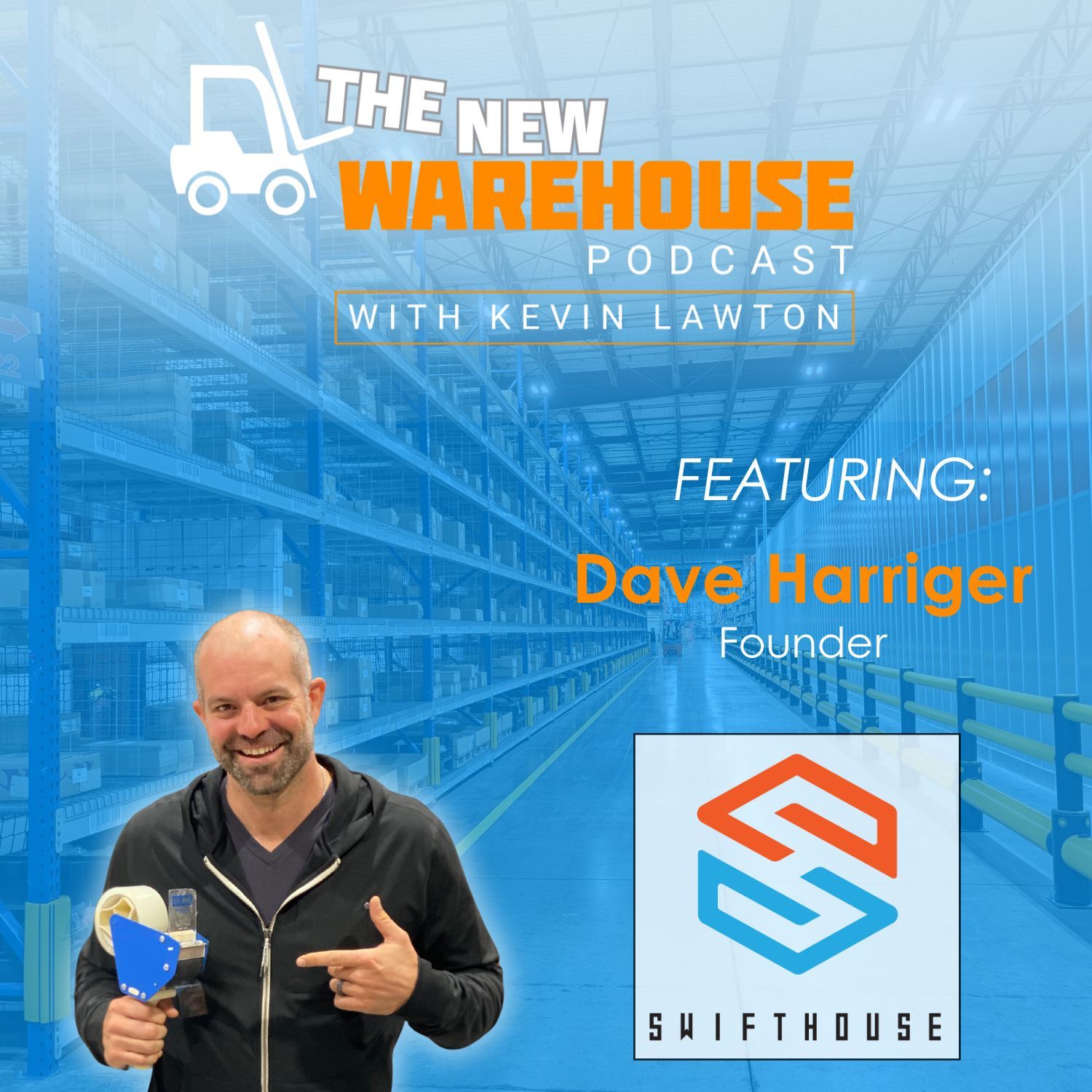
3PL Fit: Staying in Your Lane Drives 3PL Growth
In this episode of The New Warehouse Podcast, Kevin chats with Dave Harriger, CEO and Founder of Swifthouse, about the evolution of his 3PL business and the journey to implementing a new WMS. Based just outside Philadelphia, Swifthouse supports e-commerce brands with fulfillment services from pick and pack to shipping and tracking.
Dave shares how early growth, major client shifts, and operational challenges forced him to rethink his strategy. The conversation explores why defining your niche, building strong processes, and saying no to the wrong clients can ultimately drive better, more sustainable growth.
Finding the Right 3PL Fit
Swifthouse didn’t start as a traditional 3PL. Dave built the foundation through a textbook resale business that scaled nationwide. That experience created operational discipline, but the transition to serving clients introduced new challenges.
Early on, Swifthouse landed a major Amazon reseller. The volume was strong, but the risk was hidden. As Dave explains, “they could give us as much inventory as we could handle, and overnight they could change their strategy.” That risk became reality when the client reduced its warehouse network from 14 to three.
The result was excess capacity and a forced reset. Instead of downsizing, Dave kept his team intact and used the moment to refocus. He jokes, “We probably had the best swept warehouse in the country as we navigated through that.” That led to a critical realization on 3PL fit: “empty racks are better than a bad fit.”
Dave shares the dilemma many 3PLs face, trying to be everything to everyone. Once Swifthouse figured out who they work better with and that they aren’t a great fit for everyone, things started to click. And now, he’s gotten comfortable with saying “no.”
From there, the company shifted toward serving smaller brands where relationships, flexibility, and alignment mattered more than sheer volume.
Process First, Then Technology
As Swifthouse grew, its original systems began to break down. The team relied on adapted software from the textbook business, but scaling exposed its limits.
Dave highlights a key lesson many operators overlook: “what works isn’t the same as what scales.” Transitioning to a true WMS became necessary, but the first attempt failed due to insufficient preparation.
The turning point came when they focused inward. Much of their operation relied on undocumented knowledge. As Dave puts it, “the stuff that’s living in people’s heads can’t get into a WMS because it’s in their heads.” That insight drove a six-month effort to standardize processes, billing, and workflows before selecting new technology. It started by identifying who Swifthouse is and who they serve best.
This shift reframed the entire approach. Instead of expecting software to fix problems, Swifthouse built a foundation that technology could actually support. When it comes to selecting a WMS, Dave advises, “Do it sooner than you want it. It gets harder the longer you wait. Especially for a startup 3PL.”
Scaling with Discipline and Clarity
With a clearer strategy and stronger processes, Swifthouse began to scale more intentionally. That included redefining who they serve and how they operate. At the same time, the business doubled down on its positioning. “We’re boutique on purpose,” Dave says, reinforcing their commitment to high-touch service and direct communication.
This approach shows up in daily operations. For example, the team proactively identified packaging changes that reduced shipping costs for a client by getting orders under one pound.
Dave explains they differentiate themselves by designing processes that eliminate the back-and-forth and by providing simple billing. “ The goal is to take fulfillment off a brand’s plate without them needing an accounting degree to make sure it’s done correctly.” These types of insights come from experienced staff and close relationships—advantages that larger providers often struggle to replicate.
Key Takeaways on 3PL Fit
- Swifthouse scaled from a textbook resale business into a full 3PL operation starting in 2020
- The company chose to maintain its team during low volume instead of cutting headcount.
- Boutique positioning allows Swifthouse to focus on small and mid-sized brands, not enterprise clients.
- Standardizing billing and workflows was a key step before implementing software.
- Scan-based picking improved accuracy and enabled broader team participation.
- SKU mapping allows both clients and operators to use different naming conventions seamlessly
Listen to the episode below and leave your thoughts in the comments.
Guest Information
For more information on Swifthouse, click here.
To connect with Dave Harriger on LinkedIn, click here.
For more information about 3PL Fit, check out the podcasts below.
Building a Boutique 3PL with AMSCO Prep
European eCommerce Fulfillment Through a Global Lens
587: Lucas Solutions on Startup Lessons, 3PL Strategy, and Relationship-Driven Growth