Warehouse AI Starts with Clear Ownership
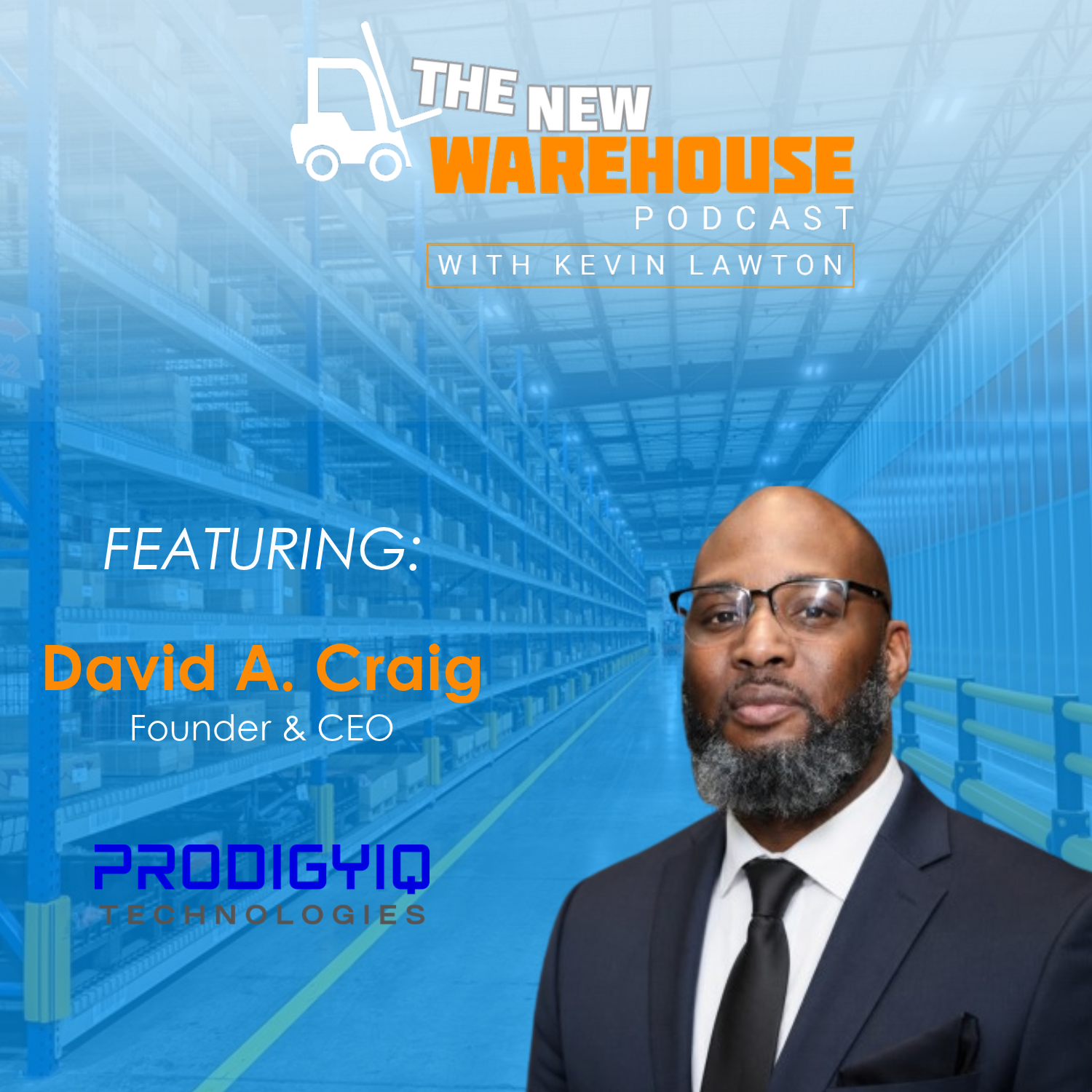
Welcome to this episode of The New Warehouse Podcast. David A. Craig, founder and CEO of ProdigyIQ Technologies, joins Kevin to discuss who makes the call when AI recommends a response to a warehouse problem.
ProdigyIQ Technologies helps organizations deploy operational AI by evaluating existing problem-solving workflows, particularly when issue resolution requires cross-departmental handoffs.
When Everyone Sees the Same Shortage
A material shortage shows up in the warehouse management system (WMS). The warehouse assumes planning is handling it. Planning assumes purchasing is working on it. Meanwhile, production is getting closer to a line stoppage.
Craig has seen situations where “Five different departments have visibility into the same problem, but nobody has clear responsibility for closing it.” At one German manufacturer he worked with, the cost was measured by the minute. As Craig recalls, “If you stop their line, it’s $12,000 a minute.”
A warehouse can run into the same handoff problem with a missed shipment, a picking error, or an item left off an advance shipping notice. Craig describes ProdigyIQ’s approach this way. “We remove chaos, we scale clarity, so you can operate intelligently.” In each case, the first person to spot the problem may work in a different department from the person who can resolve it.
Who Makes the Call on a Quality Hold?
The WMS shows material as received. Then quality flags a defect. Craig says AI can “help analyze the defect, identify similar historical issues, and recommend the next action.” That analysis can draw on records the company has already verified.
What happens to the material affects other departments. Planning may need to change the production sequence. Purchasing may need to expedite a replacement. As Craig puts it, “Humans still retain the authority for consequential, um, decisions.” In Craig’s example, the corrective action goes to a named person with a deadline. A missed deadline triggers an escalation. Once the work is done, an authorized person checks the evidence before closing the issue.
Adding Warehouse AI Starts with One Exception
Craig suggests starting with a short pick, an inventory discrepancy, or a quality defect. Choose one that keeps coming up on the floor. His advice is to follow it through the process the team already uses. “Then trace it from detection to actual closure. Document who identifies it, who decides, who owns the action, when it escalates, and what proves it was resolved.”
Craig also asks teams to examine how the automation itself could fail. He borrows that practice from manufacturing’s process failure mode and effects analysis. “You have to design that in. If you don’t know how to mitigate that failure, when that failure comes, then you’re gonna be dead in the water.” For a short pick, that means knowing who can route the exception if the automated assignment fails.
Key Takeaways
- Name an owner for each exception – Define who follows it through when the response spans departments.
- Set decision authority before using AI – AI can review prior defects and recommend an action. An authorized person decides what happens to the material.
- Test the process and its fallback – Trace one recurring exception. Check what proves it was resolved and how work continues if automation fails.
Listen to the episode below and leave your thoughts in the comments.
Guest Information
For more information on ProdigyIQ Technologies, click here.
To connect with David A. Craig on LinkedIn, click here.
For more information about Warehouse AI, check out the podcasts below.
AI in Warehouse Management: Moving from Reaction to Action
Turning Warehouse Near Misses into Safer Operations with Protex AI