Autonomous Forklifts Deliver More Than Labor Savings
What happens when a warehouse has plenty of freight to move but not enough forklift operators? For some 3PLs, that challenge can limit how much business they accept.
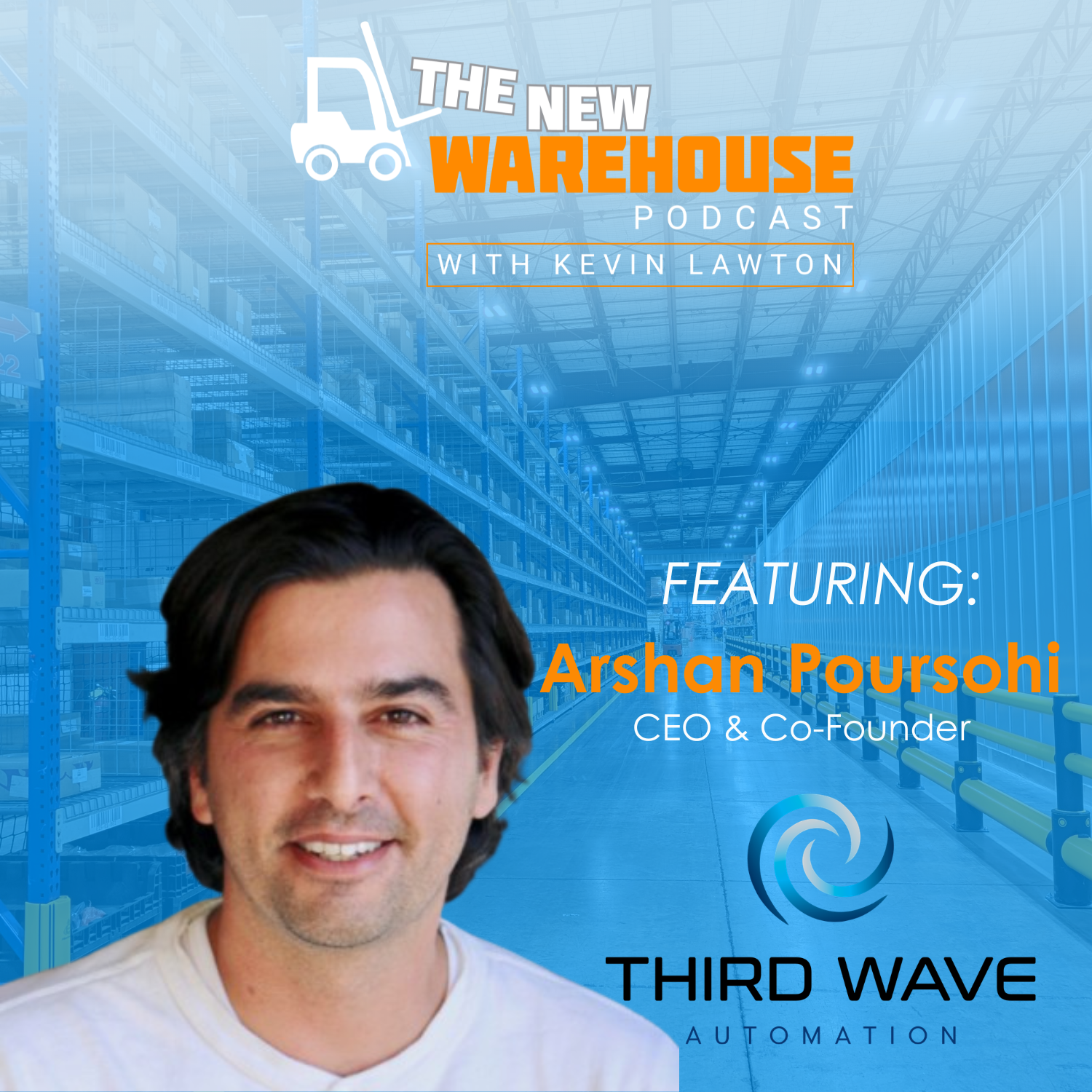
On this episode of The New Warehouse Podcast, Kevin welcomes Arshan Poursohi, CEO and co-founder of Third Wave Automation, to discuss how shared autonomy makes autonomous forklifts practical for warehouses.
When Labor Shortages Limit Warehouse Growth
At Armada Supply Chain Solutions, the forklift operator shortage threatened customer commitments. Poursohi explains what’s at stake: “What our customers want is simple: We’re going to send you 10,000 pallets, and you’re going to send out 10,000 pallets every week. If you can’t get enough people in the building to do that, a lot of the rest doesn’t matter.”
The problem didn’t end with hiring. “Hard to find, and then turnover gets you too.” Experienced operators knew where inventory belonged, how the facility worked, and which trucks rarely arrived on schedule. Replacing that knowledge wasn’t as simple as filling an open position.
Third Wave’s approach lets one employee manage multiple autonomous forklifts, potentially a dozen or more, depending on the operation. Routine pallet movements happen autonomously, while employees step in when something needs their attention. For Armada, that meant increasing capacity without relying entirely on finding more skilled operators.
Why Successful Automation Still Needs People
What happens when an autonomous forklift encounters a pallet in the wrong trailer or finds its assigned storage location occupied? Third Wave’s shared autonomy approach allows the machine to recognize when it needs help. As Poursohi explains, “don’t just train the, the machine to know what to do, also train it to know when it doesn’t know what to do.”
Third Wave also learned that having operators familiar with the warehouse makes a difference. While forklifts can be operated from thousands of miles away, local employees know things the system doesn’t. “The people that work there are super valuable, ’cause they know where stuff is.” That knowledge helps resolve exceptions without bringing the operation to a standstill.
The Hidden Costs That Strengthen Automation ROI
Rack damage caught Poursohi by surprise. A forklift striking pallet racking can force a warehouse to “shut down that area of the building” while waiting days for repairs. For an operation already struggling with capacity, losing access to part of the facility only makes matters worse.
Inventory accuracy was another unexpected benefit. Third Wave’s forklifts use cameras to identify pallets and record their movements. As Poursohi explains, “We scan every barcode, every license plate, when we pick it up, and we know exactly where we put it down.” At Armada, that approach helped support a reported 99.94% inventory accuracy rate, showing how automation can deliver value well beyond labor savings.
Key Takeaways
- Labor shortages constrain growth – Limited forklift staffing can prevent 3PLs from meeting customer demand.
- Shared autonomy extends workforce capacity – One employee can oversee multiple forklifts while handling exceptions.
- Warehouse knowledge remains valuable – Experienced employees help resolve situations that automation cannot handle independently.
- Infrastructure damage affects ROI – Avoiding rack repairs can prevent costly interruptions and lost capacity.
- Inventory accuracy adds value; automated identification and movement tracking help maintain accurate inventory records.
Listen to the episode and leave your thoughts in the comments.
Guest Information
For more information on Third Wave Automation, click here.
To connect with Arshan Poursohi on LinkedIn, click here.
For more information about autonomous forklifts, check out the podcasts below.
Peer Robotics: When Warehouse Robots Become Operational Peers
Shared Autonomy Brings Human Judgment to Autonomous Forklifts
Big Joe Expands Autonomous Material Movement and Simplifies Adoption