Chemical Warehousing: Safety, Technology, and Resilience
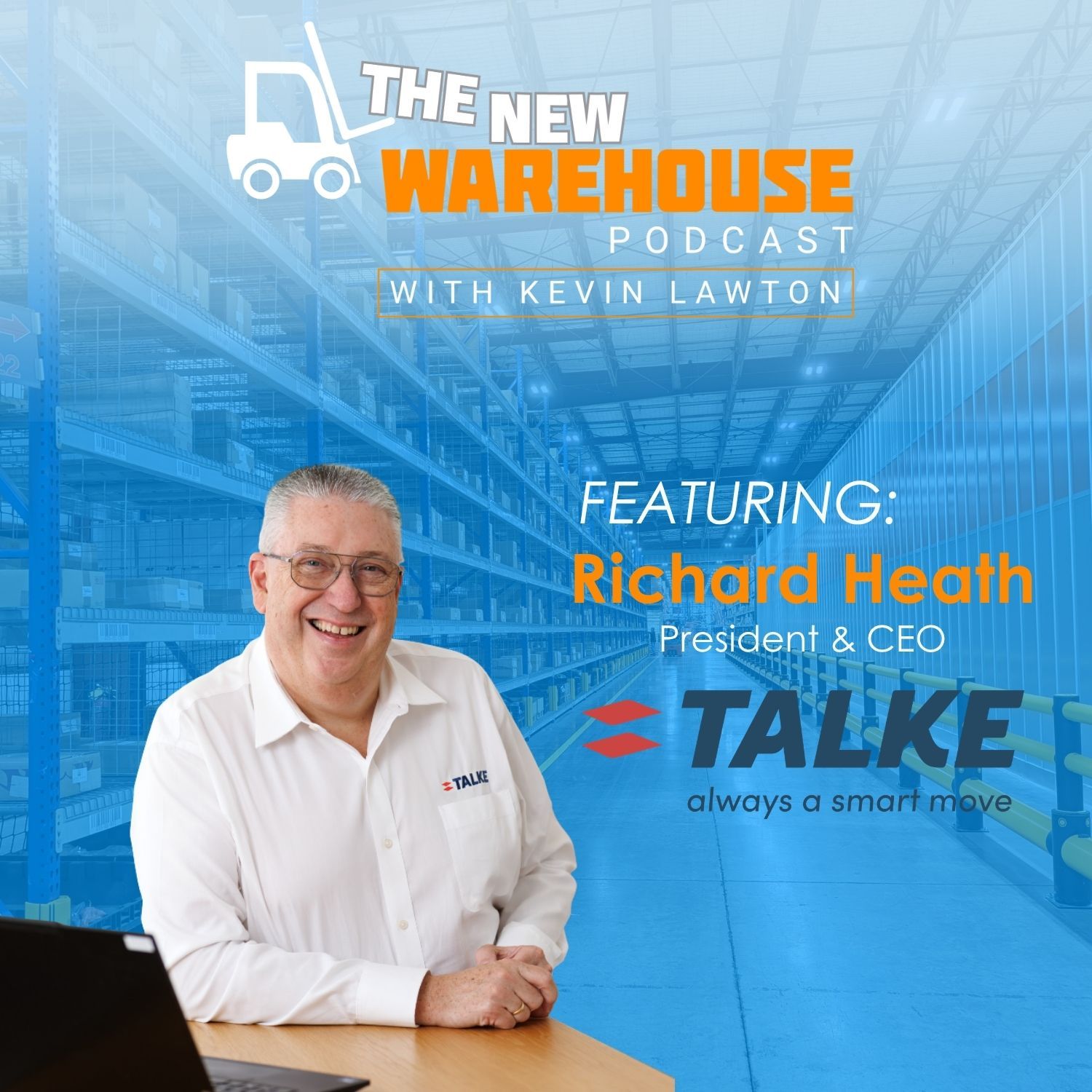
Today’s guest on The New Warehouse Podcast is Richard Heath, President and CEO of TALKE USA. TALKE specializes in chemical and petrochemical logistics, with operations spanning transportation, warehousing, material handling, packaging, and other value-added services. Founded in 1947, the company grew from transportation into increasingly specialized chemical logistics.
Heath explains why chemical warehousing requires a different operating mindset. He also shares how geopolitical disruptions can reshape chemical flows and force logistics providers to pivot.
Safety Starts With the Building
Chemical warehousing begins with a basic constraint: not every product can share the same space. Heath says, “You can’t just build a 250,000-square-foot warehouse and just pile in whatever you happen to have there that particular day.” Hazardous materials may require separate compartments based on their classifications and how they react with one another.
Fire protection also varies by product. “We have fairly sophisticated hazardous materials warehouses with foam extinguishing systems.” Some facilities even use CO2 systems that remove oxygen from a compartment. Containment matters after an incident, too. A leak or firefighting response cannot simply drain away. Heath notes, “You have to have retention systems underneath the concrete.”
Safe Chemical Warehousing with Technology
Technology can reduce exposure and repetitive work, but chemical logistics remains labor-intensive. Heath says, “I would say we are still a fairly manpower-intensive business.” Automation is being applied in predictable work, such as AMRs moving palletized goods.
Heath points to routine pallet movements as a natural target. “But that development is being used towards routine jobs, routine movements, pallet from A to B, which takes place maybe 500 times a day.” Machines can also keep toxic products enclosed during filling operations.
The WMS adds another layer of protection. “So, the WMS certainly has to be fully aware of all of those.” Storage rules can include both product compatibility and quantity limits. The result is an operation where people, equipment, software, and facility design support safety.
Resilience Keeps Chemical Supply Chains Moving
Chemical warehousing sits inside a global network that can change quickly. TALKE operates in 14 different plants in Saudi Arabia, giving the company a close view of those shifts. When routes were disrupted, product moved from Saudi Arabia’s east coast to Jeddah on the west coast. Heath describes that as roughly two to two-and-a-half days of container trucking. His takeaway is simple: “But, people find solutions and move it very quickly.”
For logistics providers, that adaptability is part of the service. “We have to be agile. You have to be resilient in these situations and try to pivot and solve the problem for the customers in one way or another.”
Key Takeaways
- Facility design must reflect the products, hazards, and customer requirements.
- Fire suppression and spill retention may require specialized infrastructure.
- WMS rules can reinforce product segregation and quantity limits.
- Resilience means finding another way to serve customers when conditions change.
Listen to the episode below and leave your thoughts in the comments.
Guest Information
For more information on Talke USA, click here.
To connect with Richard Heath on LinkedIn, click here.
To learn more about chemical warehousing and beyond, check out the podcasts below.
Voxel: A Collaborative Approach to Improving Warehouse Safety with AI-Powered Insight
Warehouse Dock Safety Gets an Upgrade: Live from ProMat 2025 with GMR Safety
MHI Industry Series: Pallet Racking Safety and Standards from the Rack Manufacturers Institute (RMI)