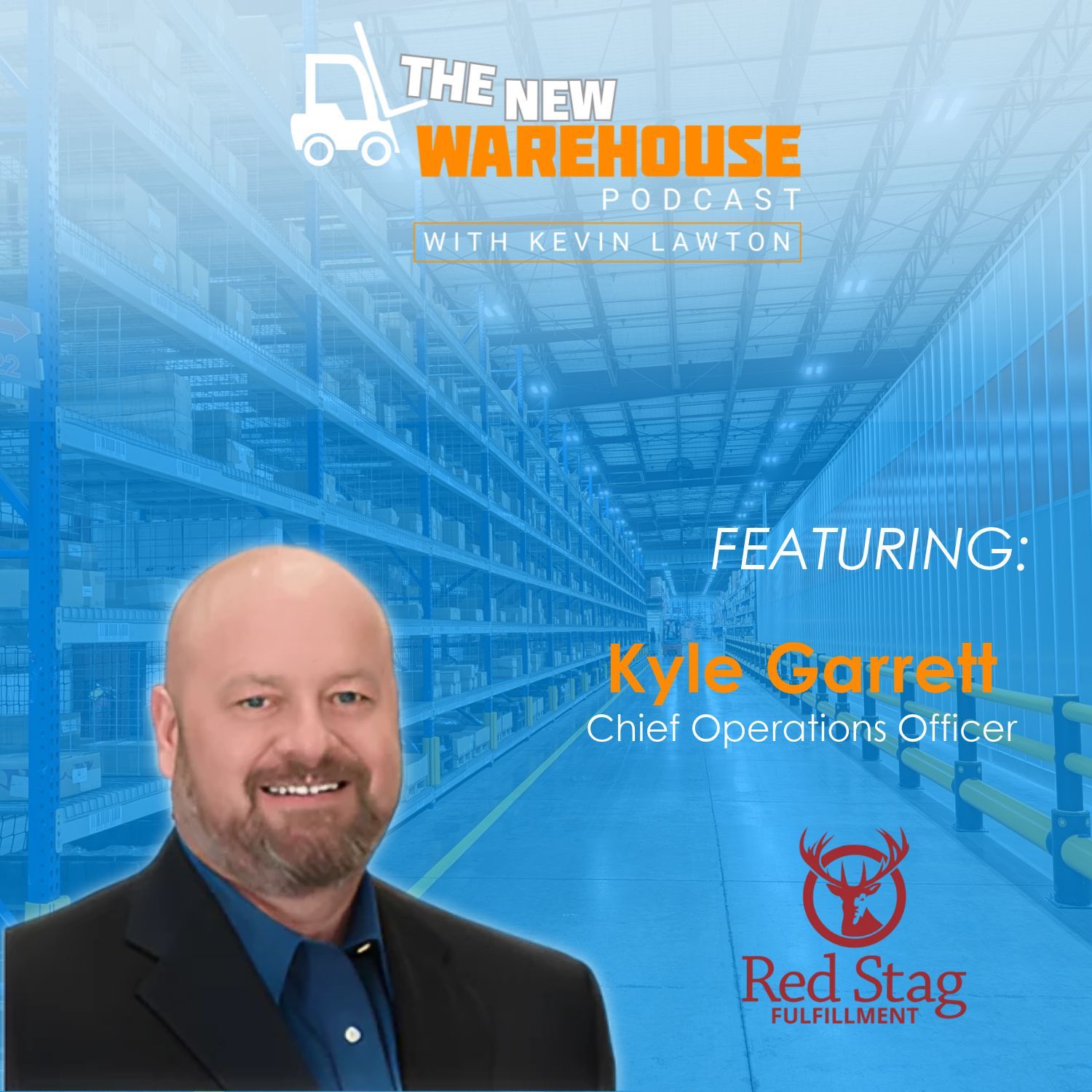
Red Stag Fulfillment and the Cost of Yes
On this episode of The New Warehouse Podcast, Red Stag Fulfillment COO Kyle Garrett joins Kevin. Together, they discuss the move from retail operations to a 3PL specializing in big and bulky products. Garrett’s move from retail operations reveals why growth decisions become more complicated when hundreds of clients share a warehouse.
Saying Yes Comes With Conditions
With Target or Walmart, you can focus on one retailer’s requirements. At Red Stag, however, more than 200 clients have their own ideas about packaging and service. Oftentimes, a request sounds straightforward during a sales conversation, but it still needs space, labor, and a process the floor can execute.
Garrett understands the sales team’s enthusiasm. “They are working on generating leads and are excited about everything.” So they ask, ‘Can we do this?’ Garrett wants to grow too, but his response now comes with specifics: “Here’s what the resources look like. Here’s what we need to invest in from a technology and automation standpoint. Here’s what we need to think about from a space constraint standpoint.” Those questions matter before a client signs.
Start With the Desk Someone Must Lift
The product mix makes those decisions harder. Desks, chairs, and exercise weights do not fit neatly into automation designed for standard cartons. Yet bulky products account for only about 40% of Red Stag’s volume. Customers selling large items also need smaller parts shipped.
Garrett is considering both sides of that business without rushing into a large installation. As he puts it, “We don’t want to build massive monuments right now.” His immediate concern is closer to the floor: “I just don’t want my labor having to lift a hundred and fifty-pound desks, so how am I supplementing that?”
Vacuum assistance is one answer for desks and chairs. Different dimensions can require adapting the vacuum head, and Garrett has looked to automotive manufacturing for ideas. Larger storage systems may eventually fit. For now, he is working through the handling steps that make receiving, picking, and loading heavy products difficult.
The Unusual Orders Need Time Too
If an order arrives late and needs to leave the same day, inventory placement has already influenced whether that happens. “Obviously, your cycle time becomes important. You know, it’s not just the deviations that matter.” The routine orders need to move well enough to leave time for the difficult ones.
A surge can change the day’s staffing needs just as quickly. “If something big hits, you know, you better have cross-trained team members, and you’ve got to get them into the right location to be able to win and get that done.” Garrett describes workload displays, alerts, and a client surge the previous day. The deadline holds; the team has to adjust.
Key Takeaways
- A new client’s requirements affect everyone sharing the warehouse.
- Red Stag’s $50 missed-order guarantee puts money behind capacity decisions.
- Heavy-product automation starts with specific handling problems.
- Fast routine flow and cross-trained employees leave room for exceptions.
Listen to the episode below and leave your thoughts in the comments.
Guest Information
For more information on Red Stag Fulfillment, click here.
To connect with Kyle Garrett on LinkedIn, click here.
For more information about fulfillment, check out the podcasts below.
Frozen Fulfillment: Cost, Data, and Transportation Waste