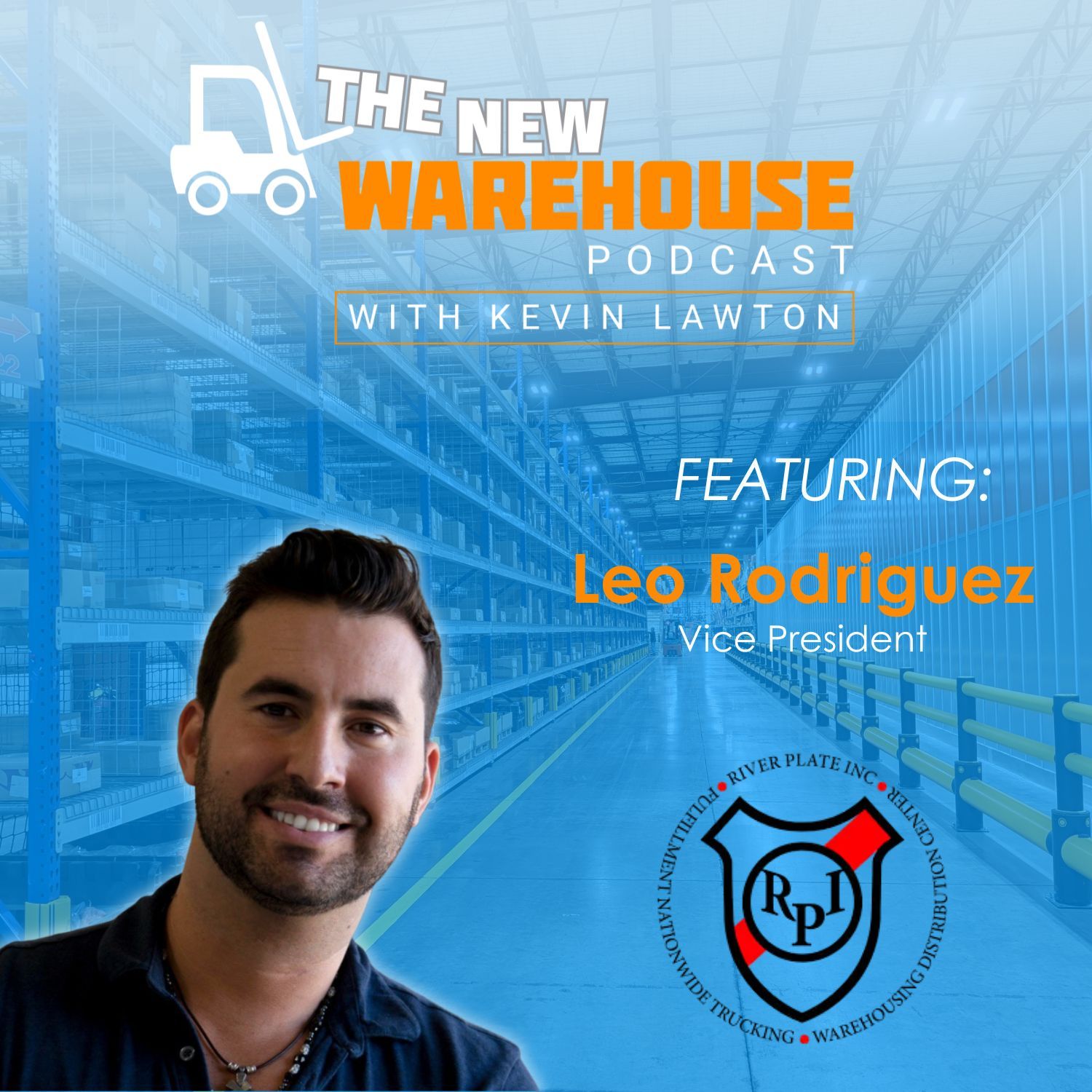
Protecting Margins in Fulfillment with River Plate
Welcome to this episode of The New Warehouse Podcast! In this episode, Kevin chats with Leo Rodriguez, Vice President of River Plate Inc. River Plate is a Southern California 3PL with 34 years of industry experience. They specialize in e-commerce fulfillment, retail distribution, hazmat beauty products, and parcel management.
Together, they explore the complexities of multi-channel fulfillment, how growing brands can protect their margins, navigate retailer compliance, and transition smoothly from D2C to retail.
Proactive Data Integration and System Alignment
Fulfillment has shifted from simple manual tasks to complex data-driven workflows. Modern logistics relies on real-time visibility across all selling channels. Leo asks where all that data is living. “Is it in their OMS or their ERP systems? Is it collaborating well with your internal systems, like the WMSs and the WESs?” That’s a huge part of understanding where you can protect margins. When brands integrate their ERP and order management systems with their 3PL’s warehouse management system, it creates alignment. Proper alignment prevents extra operational steps, mitigates compliance chargebacks, and safeguards profit margins.
When brands and 3PLs align early, it pays dividends in the future. As Leo notes, “a one- to two-hour call can save 15 to 30 hours of headaches or money being lost through inefficiencies or chargebacks.”
Unit-of-Measure Mapping Protects Margins in Fulfillment
Alignment ensures smooth order processing across marketplaces like Target, Walmart, and Shopify. The same product may be ordered differently across retailers, creating complications when the warehouse stores and allocates inventory using another unit of measure. Leo offers a real-world example: “Target could be ordering in eachs, Walmart could be ordering in carts. We currently have that situation right now.” He explains that the client’s inventory and package units of measure are maintained at the carton level, even when certain retailers insist on ordering individual units.
Those differences require accurate mapping between the retailer, the brand, and the 3PL’s systems. “There’s mapping that’s done through the EDI and then some of them through APIs,” Leo says. The information must enter the WMS accurately, allocate against the correct inventory, and then convert back into the retailer’s required format.
Even a small discrepancy in a SKU, alias, or unit of measure can create delays and consume valuable labor. Leo notes, “Sometimes you have 15 people’s hands in the cookie jar trying to fix it.” That is why he stresses “spending the time and doing your due diligence on… testing and getting verification.” Proper system testing protects margins by reducing troubleshooting, preventing avoidable rework, and lowering the risk of retailer chargebacks.
Strategic Parcel Management and Package Profiling
One of the biggest challenges for protecting margins in fulfillment is the instability of carrier rates and fuel surcharges. “It’s a moving target for sure,” Leo says. Instead of automatically assigning shipments to a predetermined carrier, 3PLs can compare services based on cost, transit time, package characteristics, and customer expectations. “These are not static one-to-one,” Leo explains. “You’re not just saying, ‘if it’s going ground, it’s going FedEx Ground, or it’s going USPS.’ No, there’s rate shopping tools now.”
Protecting margins in fulfillment should also begin before products reach the warehouse, with Leo recommending “having the discussion at the point of where they’re even doing R&D or in manufacturing.” Minor packaging decisions can have significant financial consequences because “one inch or two inches in the width… could increase your per-case shipping.” Accurate weight and dimension profiles also support cartonization, which Leo says “will essentially review the order and then… the net dimensions and weight of the individual products.” These tools help select appropriate packaging for multi-SKU orders, reduce dimensional-weight penalties, and prevent unnecessary parcel spending.
Key Takeaways
- 34 Years of Evolution: River Plate transitioned from a local Southern California courier into a comprehensive 3PL operating out of a single 138,000-square-foot facility.
- Collaboration Prevents Headaches: Spending one to two hours aligning on product profiles saves up to 30 hours of operational headaches and chargebacks.
- Mastering UOM Mapping: Seamlessly converting between individual units and carton-level packaging profiles protects against retailer penalties.
- Dynamic Parcel Strategies: Quarterly carrier reviews and automated cartonization tools optimize shipping spend against strict carrier DIM rules.
Listen to the episode below and leave your thoughts in the comments.
Guest Information
For more information on River Plate Inc., click here.
To connect with Leo Rodriguez on LinkedIn, click here.
For more information about protecting margins in fulfillment, check out the podcasts below.
eCommerce Fulfillment Strategy: What Growing Brands Must Get Right
Warehouse Fulfillment Strategy for a Changing Consumer Landscape