Turning Warehouse Near Misses into Safer Operations with Protex AI
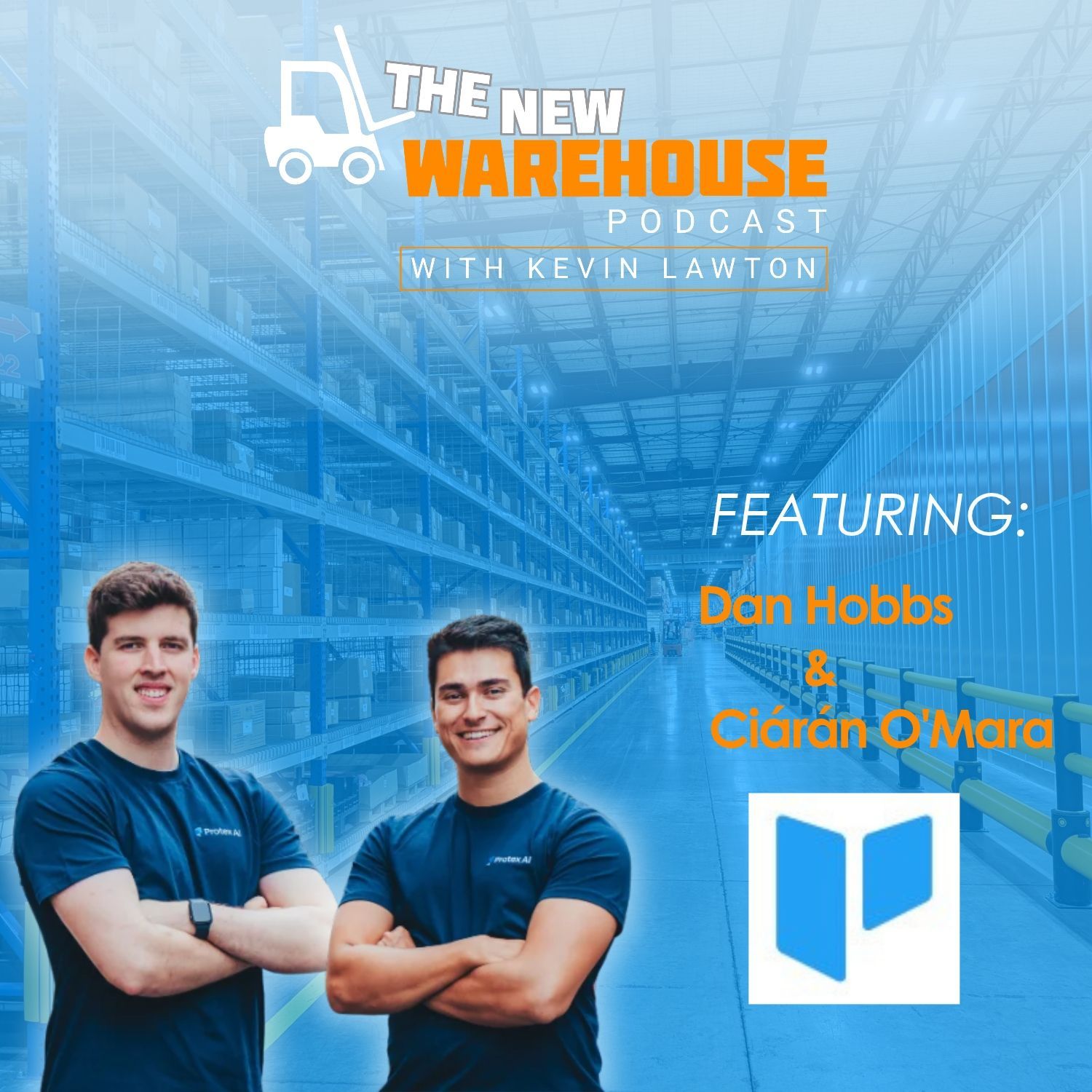
In this episode of The New Warehouse Podcast, Kevin welcomes Protex AI co-founders Dan Hobbs, CEO, and Ciárán O’Mara, chief product and technology officer.
Protex AI uses existing facility cameras to identify safety risks and operational inefficiencies. The conversation explores what happens when that visibility challenges a leader’s explanation for recurring problems.
A Lack of Near Miss Reporting May Hide More Risk
One customer believed its busiest safety-reporting site needed the most attention, while a second facility, with fewer reports, appeared safer. Hobbs explains what camera data revealed, “What it showed is that the safety culture in site B was really poor, so they weren’t really reporting a whole lot.” The reporting totals had directed attention toward the wrong facility.
At Dot Foods, the challenge became turning new visibility into action. The team established where pallet truck near misses occurred, their frequency, and their severity. O’Mara says, “They took a very coaching-first approach, looking at areas and shifts in the facility as a whole, as opposed to any specific instance.” He reports a 70% reduction in some near misses in specific areas. The team tracked trends rather than trying to watch every clip, giving shift conversations a defined focus.
A Winter Clothing Change Reduced Warehouse Near Misses
At another customer’s Midwest warehouses, near misses kept increasing during cold weather. Repeated discussions about paying attention failed to change the pattern. Video revealed that workers wore their hoods up, limiting peripheral vision. Hobbs says, “It had nothing to do with behavior. It was just purely down to people being cold and putting their hoods up.”
The response addressed the conditions workers faced. Hobbs explains, “So they brought in a no hoodie policy, and they brought in these company-branded beanies during winter, and gave it to the staff, and they reduced near misses by 73%.” That finding also gave employees evidence for a conversation management had been missing. Workers could demonstrate that repeated warnings overlooked a practical obstacle. The company could change its approach without asking people to keep working cold.
Automation Creates Work Beyond the SOP
A bread manufacturer in Mexico introduced robotics into part of its process. Occasional jams created an intervention task for workers. O’Mara explains the broader problem: “In some cases, it forces humans to do things when robots or automation fails, again, coming back to that non-standard work piece, to kind of do things that weren’t documented, aren’t in the SOP, because they need to work around and get something working again.”
The customer’s footage exposed the consequence. “And in this case, we actually found numerous occasions where the workers were putting their hand into the machine, which had blades, to actually remove the jam.” The financial discussion adds another reason to examine these exceptions. Hobbs notes that self-insured customers bear injury costs directly. He also describes how misplaced forklifts can disrupt traffic and waste operating time. Safety and productivity problems can begin with the same workaround.
Key Takeaways on Warehouse Near Misses
- Low reporting can conceal risk and distort comparisons between facilities.
- Dot Foods used shift and area trends to guide coaching.
- A small and seemingly insignificant clothing change produced a reported 73% reduction in near misses.
- Automation reviews need to account for jams and undocumented recovery work.
Listen to the episode below and leave your thoughts in the comments.
Guest Information
For more information on Protex AI, click here.
To connect with Dan Hobbs on LinkedIn, click here.
To connect with Ciárán O’Mara on LinkedIn, click here.
For more information about warehouse near misses, check out the podcasts below.
Voxel: A Collaborative Approach to Improving Warehouse Safety with AI-Powered Insight
Rack Safety with UpRight Warehouse Solutions: Fast Repairs, Real Prevention, and Smarter Response
Building the Warehouse of the Future Like Legos: Toyota Automated Logistics