Peak Season Planning with Flexible Warehouse Automation
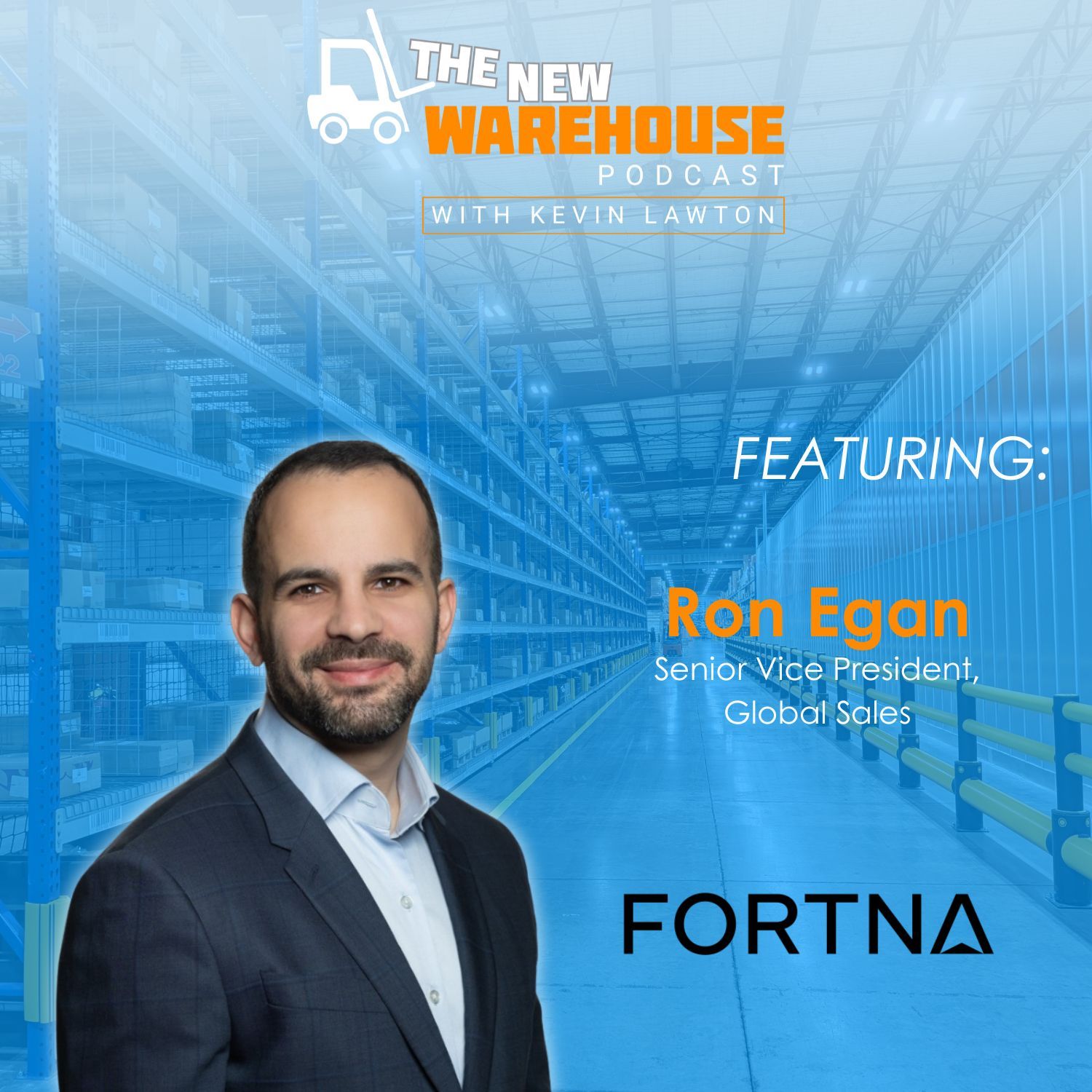
Welcome to The New Warehouse Podcast. Ron Egan, senior vice president of sales at FORTNA, joins Kevin to discuss peak planning. FORTNA designs, integrates, and supports warehouse and parcel distribution systems. Egan shares where operations get caught, how to test readiness, and why faster picking alone won’t solve the problem.
The conversation tackles a costly question: How much automation does a warehouse need when its busiest days keep changing?
More Peak Days Change the Investment Decision
Now, membership promotions, back-to-school demand, and early holiday shopping create more busy periods. Egan remembers customers moving 65% of their annual volume through a distribution center in roughly three weeks. Some companies may face 60–70 peak days instead of 15–20. Egan cautions against planning around volume alone: “And it’s not just volume, it’s also the type of volume, where the orders will come from, what channel they’ll need to be fulfilled in, and what the order mix looks like.”
An e-commerce promotion brings different work than store replenishment. Individual picking, packing, late cutoffs, and returns all affect what the operation must handle.
Faster Picking Can Expose the Next Bottleneck
A proposed system’s pick rate is an easy number to compare, but it only tells part of the story. Egan explains, “When you focus on machine rate, you don’t always get the answer for what your usable peak capacity will be in the building.”
Product selection also affects the design. “For example, automation doesn’t always do best with the fastest movers.” Egan describes using relatively low-cost manual or semi-automated workflows for predictable A movers. Picking automation can then handle B and C movers where it fits.
That creates another requirement: coordinating the work. Egan gives an example of software feeding faster pickers more volume. Seasonal labor also needs workflows that supplement automation without leaving people waiting on it.
Plan for the Third Difficult Day
One rough day is often recoverable. Several in a row can leave a warehouse chasing orders for weeks. Egan asks, “Does the unfinished work just continue to build and consume the next day’s volume, or do you have ways to recover?” This is where a peak plan needs more than a daily capacity target.
Before peak, Egan recommends looking beyond whether orders are shipping. Replenishment starvation, exceptions, downtime, and labor productivity can reveal where the operation is struggling. Testing should also challenge the assumptions behind the plan: “And again, that comes back to how good do you feel about your forecast, and how do you model if the forecast is high, if the forecast is low, if the mix within the forecast varies?”
Afterward, shipment totals still don’t tell the whole story. Egan asks, “What did it cost us to have a successful peak?” Added labor and overtime may have preserved service while pushing cost per unit beyond target. That gap helps identify where next year’s investment belongs.
Key Takeaways
- More peak days can strengthen automation economics, but order mix still drives requirements.
- Evaluate capacity through replenishment, picking, packing, and shipping.
- Keep manual workflows in the automation discussion, especially for predictable fast movers.
- Test recovery from consecutive difficult days.
- Review the cost of meeting customer commitments, not just whether orders shipped.
Listen to the episode below and leave your thoughts in the comments.
Guest Information
For more information on FORTNA, click here.
To connect with Ron Egan on LinkedIn, click here.
For more information about flexible warehouse automation, check out the podcasts below.
Flexible Warehouse Automation and the Future of Fulfillment
Building the Warehouse of the Future Like Legos: Toyota Automated Logistics
Improving Supply Chain Visibility Starts with Warehouse Execution