AI Agents in Warehouse Operations with Traba
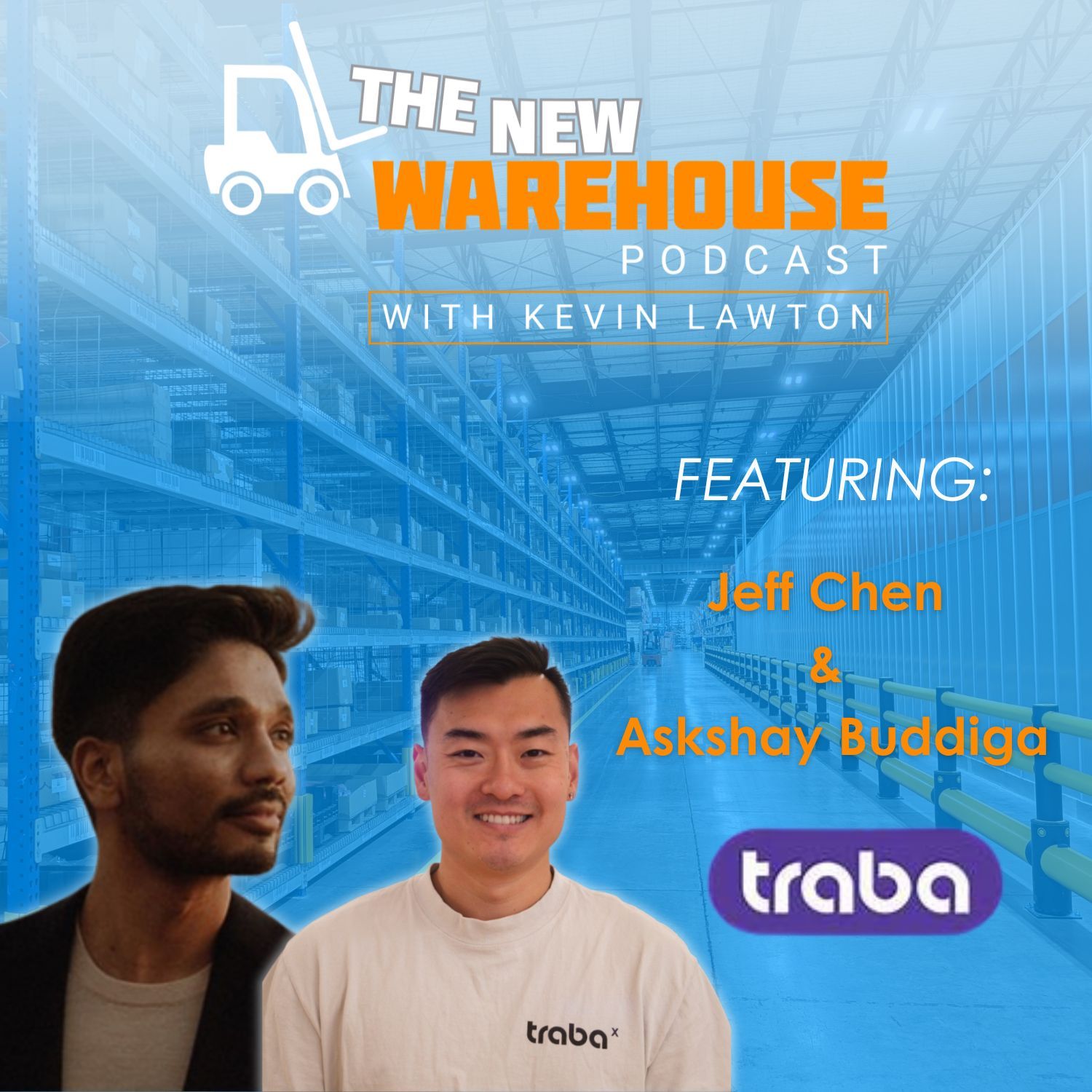
Welcome to this episode of The New Warehouse Podcast, recorded at Traba’s Manhattan office. Kevin is joined by Akshay Buddiga, co-founder and CTO of Traba, and engineering director Jeff Chen. Traba began by using technology and operational support to improve industrial staffing. Its next evolution is Neo, an AI operating system built for the industrial supply chain.
Buddiga and Chen explain how AI agents differ from chatbots, connect fragmented warehouse systems, and reshape the relationship between people, automation, and warehouse intelligence.
From Warehouse Staffing to Operational Intelligence
Traba’s expansion into AI began with five years of warehouse staffing experience. While traditional agencies achieved fill rates of 50% to 70%, Traba’s model improved worker matching, accelerated staffing, and created more consistent results. Buddiga explains, “And so we were able to flip the script to be able to get up to close to a hundred percent fill rates with customers, drive one-day turnaround times versus a week or more, really focusing on the consistency of workers, so workers are actually sticking around for a long period of time, ensuring that the match was right.”
However, staffing challenges often exposed larger operational problems. These included data silos, poor communication, and reactive decision-making. That discovery led Traba beyond staffing to launch Neo. Buddiga says, “Neo really is the AI operating system for the industrial supply chain.” Neo connects existing systems without requiring operators to replace their technology. He adds, “It sits across all the different systems you might be using. It’s able to draw data from those systems to make insights and recommendations.” Additionally, Neo can take automated actions across all these different systems.
AI Agents Move Beyond Answering Questions
AI agents differ from standard chatbots because they understand an organization’s data, systems, processes, and operating context. They also remember that context and improve over time.
More importantly, agents do not always wait for someone to ask a question. Buddiga explains, “An agent is actually proactive so that you can instruct it. In this case, you can have Neo watching all the things that are happening within your operation.” It can connect information from a WMS, incoming emails, carrier updates, and other systems. Neo can then recommend an action or complete an approved workflow.
The level of autonomy depends on the task. High-stakes decisions can remain subject to human approval. More predictable workflows can run automatically. One customer previously spent one to three hours printing bulk shipping labels each morning. Neo now enters the WMS and prints them before employees arrive. As Buddiga explains, “And so now it’s acting more like an AI teammate versus you just asking the AI to answer some question.”
Automation Raises the Value of Human Work
The Traba team does not view AI as simply replacing warehouse employees. Instead, agents can remove repetitive tasks and increase each worker’s capacity.
One back-office team used Neo to expand its bulk shipping workload. Chen says, “They got a hold of the software and literally within a manner of about twenty-four hours, forty-eight hours, they were doing basically 10x their workload.” The team moved from managing roughly 20 labels to about 200. Employees could then address nine other improvement opportunities that had remained on their wish list.
This example illustrates the difference between automating a task and eliminating a role. Buddiga explains, “A task itself is not the entire job, right? It’s not a full workflow.” Workers can instead handle exceptions, manage automation, improve processes, and solve more valuable problems. That transition will require upskilling. However, Traba has already seen new employees building agents and workflows by their third day.
Key Takeaways on AI Agents
- AI agents connect operational systems – Neo can draw information from a WMS, emails, carrier systems, and other sources.
- AI can increase worker capacity – One team reportedly increased its workload tenfold within 24 to 48 hours.
- Tasks may disappear without eliminating jobs – Employees can shift toward exceptions, projects, process improvement, and decision-making.
- Warehouse employees will need new skills – Agent prompting, workflow management, automation oversight, and creative problem-solving will become more valuable.
Listen to the episode below and leave your thoughts in the comments.
Guest Information
For more information on Traba, click here.
To connect with Akshay Buddiga on LinkedIn, click here.
To connect with Jeff Chen on LinkedIn, click here.
For more information about AI agents, check out the podcasts below.
AI Adoption at Walmart: Putting AI in Employees’ Hands
Where is Warehouse Technology Heading with Gary Allen of Ryder?