On-Demand Warehousing Solves Distressed Freight Problems
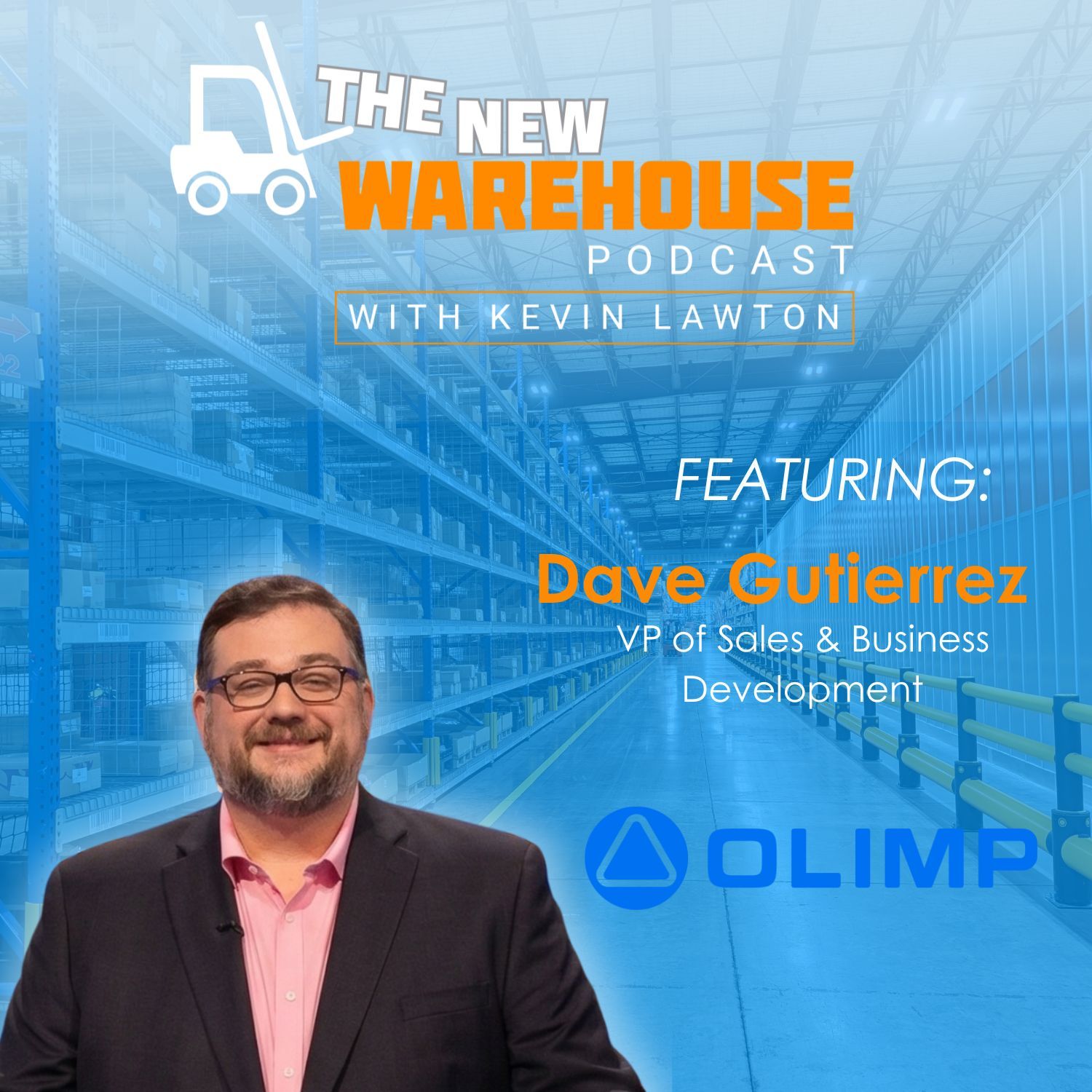
In this episode of The New Warehouse Podcast, Kevin chats with Dave Gutierrez, Vice President of Sales at OLIMP Warehousing. OLIMP operates a digital marketplace that connects available warehouse capacity with companies that need fast logistics support.
The conversation explores the growing demand for on-demand warehousing and why it is becoming an essential tool for brokers, carriers, and warehouse operators. Gutierrez explains how OLIMP helps solve urgent freight problems, particularly when shipments are rejected, damaged, or delayed.
By connecting warehouses with immediate service opportunities, OLIMP enables businesses to recover disrupted shipments while helping warehouses monetize unused labor and space.
How On-Demand Warehousing Connects Capacity and Urgent Needs
On-demand warehousing helps companies solve urgent logistics problems by connecting freight that needs immediate attention with available warehousing and storage. Gutierrez explains that OLIMP’s model is designed specifically for these time-sensitive situations. As he puts it, “OLIMP is a digital marketplace to connect available warehouse capacity with people who need it on-demand warehouse services.”
Many of OLIMP’s customers are brokers and carriers facing real-time delivery disruptions. For example, a shipment may arrive at a retailer with damaged pallets or improperly wrapped freight. Instead of returning the freight to the shipper, the carrier can quickly find a nearby warehouse to rework the load. Gutierrez notes that “most of our customer base, probably 90%, is in the brokerage and carrier space where they’re looking for same-day on-demand services.”
The platform acts as a service marketplace, routing requests through an RFQ system and matching them with available warehouses in minutes. While automation plays a role, relationships remain critical. OLIMP staff still communicate directly with warehouse partners to confirm availability and ensure the work can be completed quickly.
Distressed Freight Is Driving the Market
One of the biggest drivers behind on-demand warehousing is what Gutierrez calls “distressed freight.” These situations occur when freight cannot continue moving through the supply chain as planned. Gutierrez explains, “We call that distressed freight.”
Distressed freight can occur for many reasons. A truck may miss a delivery appointment, a load may shift during transit, or a receiver may reject freight because pallets are damaged. In these situations, drivers often become stuck waiting for instructions while carriers absorb additional costs.
Gutierrez highlights how common these situations are, noting that “that portion of our business makes up, in terms of order volume, a substantial portion, probably close to 70% of the orders that we see.”
The impact extends beyond a single shipment. When a truck cannot unload, the trailer remains occupied, and the driver cannot move to the next job. By quickly transferring freight to a warehouse for restacking, storage, or inspection, companies can keep trucks moving while resolving the issue more efficiently.
Turning Idle Warehouse Capacity Into Revenue
For warehouse operators, on-demand warehousing offers a way to turn unused space and labor into incremental revenue. Many facilities experience occasional utilization gaps, whether due to seasonal demand shifts or fluctuating freight volumes.
Gutierrez describes the opportunity from the warehouse perspective: “I’m sitting here with some empty racks, and more importantly, I’ve got a couple of guys standing around holding up brooms today instead of doing any work.”
Rather than searching for small, short-term jobs through traditional sales channels, warehouses can use OLIMP’s platform to bid on work posted in their area. Gutierrez explains the financial logic simply: “If I could make four or 500 bucks, restacking a couple loads for carriers, handling a couple extra trucks today, that makes a ton of sense for me.”
These quick-turn projects can include restacks, cross-docking, short-term storage, transloading, and inspection holds. Over time, some short-term jobs even evolve into longer-term storage projects, creating new business opportunities for warehouse partners.
Key Takeaways
- Distressed freight drives a significant portion of on-demand warehousing demand, representing roughly 70% of OLIMP’s order volume.
- OLIMP primarily serves brokers and carriers, with about 90% of customers coming from the brokerage and carrier space.
- On-demand warehousing can resolve urgent logistics disruptions such as missed appointments, rejected freight, damaged pallets, and insurance inspections.
- The platform connects freight needs with available capacity using a digital RFQ portal and warehouse job board system.
- Many requests are extremely time-sensitive, with warehouses sometimes receiving trucks within an hour of the request.
- Warehouse operators can monetize unused labor and space by accepting short-term restacks, cross-dock jobs, and overflow storage projects.
- On-demand warehousing helps reduce costly delays by quickly moving freight off trucks and into nearby warehouses.
- The model benefits both sides of the market by simplifying relationships and eliminating the need for multiple individual warehouse accounts or contracts.
Listen to the episode below and leave your thoughts in the comments.
Guest Information
For more information on OLIMP Warehousing, click here.
To connect with Dave Gutierrez on LinkedIn, click here.
For more information about On-Demand warehousing, check out the podcasts below.
Industrial Real Estate Trends: Forces Reshaping Warehousing Today
Live from WERC: Synkrato is Changing Warehousing from the Ground Up with AI
MHI Industry Group Series: TRG on the Robotics Boom Reshaping Warehousing