Warehouse Automation Success Depends on Operational Alignment
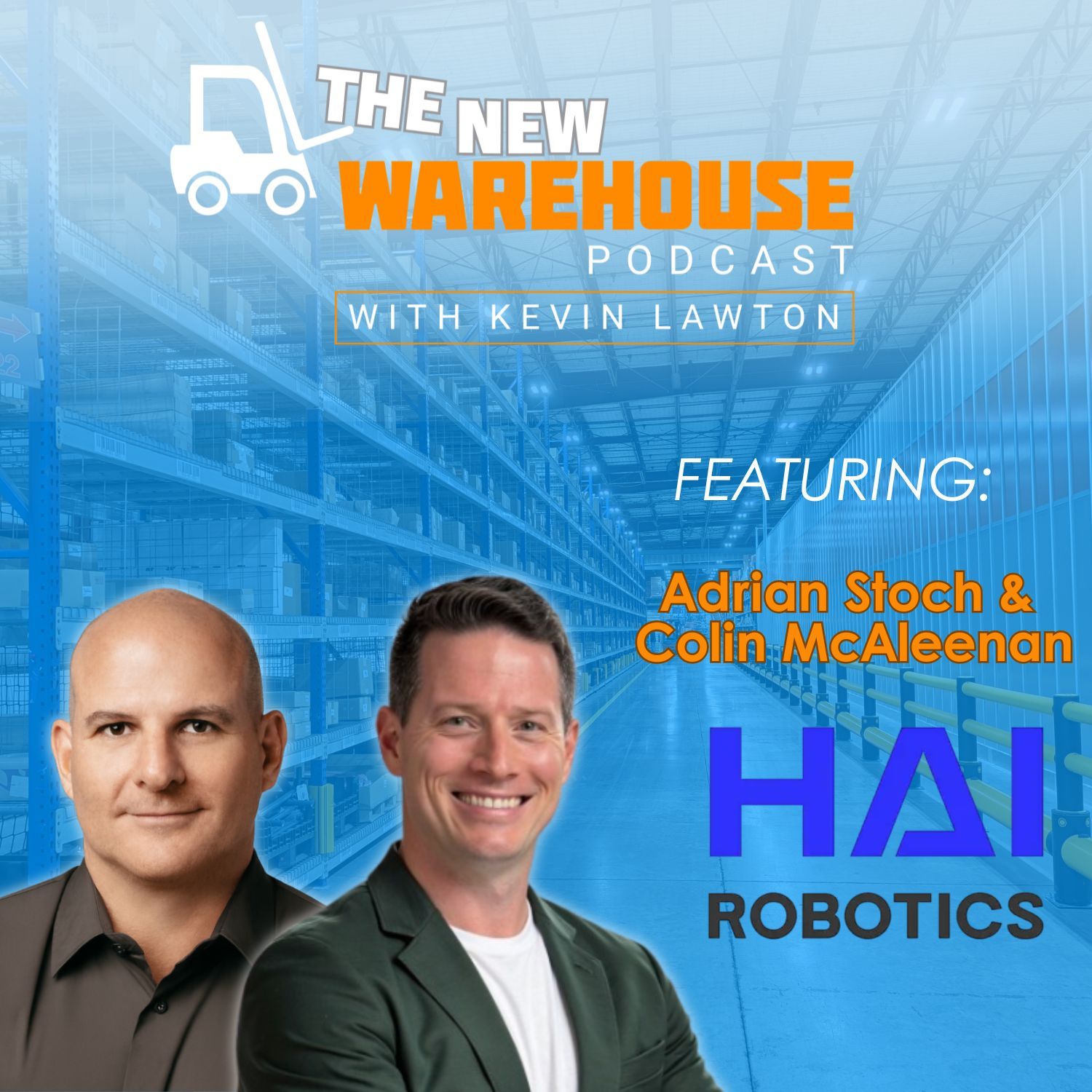
In this episode of The New Warehouse Podcast, Kevin chats with Adrian Stoch, CEO of Americas, and Colin McAleenan, Vice President of Marketing and Business Development at Hai Robotics. Stoch and McAleenan share insights on automation failures, customer expectations, data integrity, and the importance of alignment between vendors, integrators, and warehouse operators.
Hai Robotics, known for its mobile ASRS technology and the recently introduced HaiPick Climb system, focuses on solving real operational challenges rather than simply improving robot performance. Stoch shares insights into automation failures, customer expectations, and the importance of aligning vendors, integrators, and operators around measurable operational outcomes.
Understanding What Warehouse Automation Success Really Means
Warehouse automation success often gets measured by the wrong metrics. Many vendors highlight robot performance or throughput, but that does not always translate to operational improvements. Stoch explains that the real measure of success lies in the customer’s operational results. As he puts it, “We’re here to solve customers pain points and really think about our successful outcomes as the customers outcomes, not whether or not our robots are moving faster now.”
This distinction becomes clear when automation systems meet technical specifications but still fail to improve warehouse performance. Operators care about meeting service levels, hitting KPIs, and maintaining operational flow. Stoch emphasizes that those outcomes must drive the design and deployment of automation systems.
He highlights this gap directly when discussing warehouse operations after automation deployments: “Just because the robots are hitting presentation rate does not mean that the warehouse is hitting their SLAs.” For operators evaluating automation, success must be defined in operational terms. Throughput, order fulfillment performance, and service levels matter more than isolated system metrics.
Why Some Warehouse Automation Deployments Fail
Stoch notes that many companies are now confronting difficult lessons from earlier implementations. In some cases, Stoch details, “a number of customers that have gone through implementations are decommissioning systems.”
Colin McAleenan emphasizes that automation success depends not only on hardware but also on the quality of the data behind the operation. Companies must understand and trust their data before deploying advanced automation systems. He explains, “Like with any good software tool, the basis starts with good data.”
McAleenan highlights the risk clearly: “If you don’t trust that data or it’s incomplete, I don’t care how sophisticated the partner is that you work with and how good their AI tools are, you are going to have gaps in the learning algorithms.”
Companies often underestimate the operational challenges involved in implementing advanced warehouse systems. “There’s something very important that I just call complexity denial.” Adds Stoch. “Complexity denial on how difficult these systems are to deploy.” These failures have made warehouse operators more cautious. However, they have also made buyers more knowledgeable and demanding when evaluating automation solutions.
Hai’s Mutually Assured Success Model for Warehouse Automation
Achieving warehouse automation success requires alignment between operators, integrators, and technology providers. Stoch believes this alignment must start with clearly defined outcomes. Vendors and partners should agree on the operational metrics that define success before a project begins.
He explains this principle when discussing automation planning: “when they are defining what it is they’re getting from the integrator and the automation vendor, that they defined it in terms of their success outcomes, their KPIs.”
Another key factor is maintaining strong collaboration between all stakeholders. Stoch argues that the automation provider must remain closely connected to the customer’s operational needs throughout the project.
As he puts it, “it’s gotta be a three-way equal triangle. The automation vendor has gotta understand what the customer needs and not through interpretation by a middle person.”
This collaborative approach reduces misalignment and ensures the technology supports real warehouse operations rather than simply meeting technical specifications.
Key Takeaways
- Warehouse automation success should be measured by operational outcomes such as SLAs and KPIs, not robot speed.
- Some warehouses are decommissioning automation systems that failed to meet operational expectations.
- Many automation failures stem from underestimating operational complexity during deployment.
- Alignment between customers, integrators, and automation vendors is essential for successful projects.
- Automation vendors must understand real warehouse workflows, not just system performance metrics.
- Buyers are becoming more sophisticated and demanding after early automation deployments.
- Defining success outcomes before implementation helps ensure alignment across project stakeholders.
- Collaboration between all parties helps reduce integration challenges and operational gaps.
Listen to the episode below and leave your thoughts in the comments.
Guest Information
For more information on Hai Robotics, click here.
To connect with Adrian Stoch on LinkedIn, click here.
To connect with Colin McAleenan on LinkedIn, click here.
For more information about warehouse automation success, check out the podcasts below.
How to Help Your Leadership Team Justify Investing in Warehouse Automation
Flexible Warehouse Automation and the Future of Fulfillment
Warehouse Automation Planning: What It Really Takes to Prepare for Peak