The Buyer’s Journey for Warehouse Automation
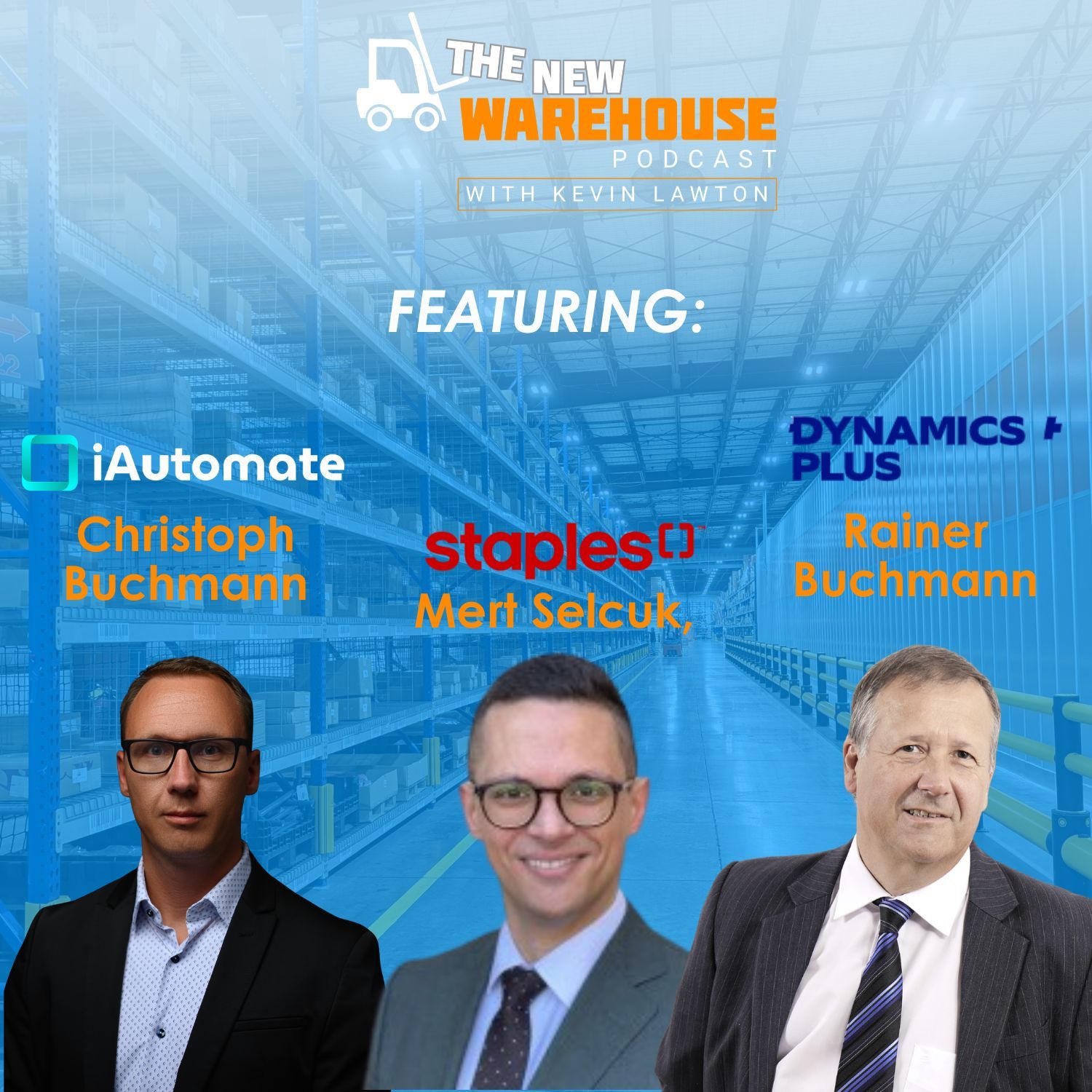
In this episode of The New Warehouse Podcast, Kevin Lawton brings together a panel representing every side of the warehouse automation buying journey. The conversation features Christoph Buchmann, CEO of iAutomate; Mert Selchuk, Director of Supply Chain Strategy, Solutions Design, and Engineering at Staples Canada; and Rainer Buchmann, former CEO of Dematic and SSI Schaefer and current CEO of Dynamics Plus.
Together, they unpack where automation projects truly begin, why many efforts stall before they start, and how buyers and solution providers can navigate complexity with better data, clearer alignment, and stronger partnerships.
Where the Automation Buying Journey Really Begins
The automation buying journey rarely starts with a vendor call. According to Christoph Buchmann, it begins much earlier, inside the operation itself. “Where does the buying journey begin? I would actually say it really starts with having identified a problem statement and understanding that warehouse automation is potentially a viable solution.”
By the time a solution provider begins internal conversations, evaluations, and early buy-in are often already underway. Buchmann adds, “I’ve had several conversations in the past ten years where people had a fixed opinion already on what they wanted, and only through more thoughtful, deeper discussions and data crunching, they got convinced that it is not the right solution for their problem.”
From the buyer side, Mert Selchuk reinforces that disciplined preparation is critical. “We identify a problem gap or an opportunity… repeatable behavior, automatable behaviors, automatable processes.” That work includes deep data analysis, WMS validation, and exhausting non-automation fixes first. The goal is clarity. Automation should support a defined need, not compensate for broken fundamentals. As Buchmann warns, “If you automate a bad process, you’ve still got a bad process. Just a very expensive one.”
How the Buyer’s Journey Moves from Curiosity to Commitment
Trade shows, demos, and marketing fuel curiosity, but curiosity alone doesn’t justify capital. Rainer Buchmann has seen this shift over the course of decades in the industry. “People had a fixed opinion already on what they wanted… and only through some deeper discussions and data crunching, they got convinced, ‘oh no, that maybe is not the right solution.’” More information doesn’t always mean better decisions without context.
Selchuk highlights one of the biggest friction points in moving forward: time. “You’re just waiting for four weeks… just to get a number for you to plug this model that’s already there.” Early-stage tools for the automation buying journey, like Kardex StoreX and the iAutomate Configurator, that provide directional cost and ROI estimates, help teams decide whether a project is even viable before heavy engineering work begins. That speed benefits both buyers and suppliers by filtering out projects that lack alignment or budget support.
Why Partnership Matters More Than Technology
Successful automation projects rely on collaboration, not transactions. Selchuk emphasizes that solutions must account for the entire operational flow. “Unless I can articulate, ‘here’s how the product flow is coming into the system… and here’s how it gets out,’ this thing doesn’t go.” Partial solutions often create new bottlenecks, either upstream or downstream.
Rainer Buchmann frames it simply. “Integrated automation is a journey. The project does not stop when you’ve delivered it, so be careful who you select as your partner.” Automation investments can shape operations for 10–20 years. They affect careers, resilience, and long-term flexibility. As Christoph Buchmann notes, “While the transaction is a one-time thing, that customer is investing 20 years into the infrastructure of their supply chain.”
Key Takeaways
- Automation projects begin with clearly defined operational problems, not vendor conversations.
- Data validation and internal alignment happen months before solution providers are engaged.
- Faster, early-stage cost and ROI visibility helps qualify opportunities sooner.r
- Technology-first thinking increases risk and sticker shock
- Long-term success depends on collaborative, end-to-end partnerships
- Automation investments shape operations, careers, and resilience for decades
Listen to the episode below and leave your thoughts in the comments.
Guest Information
For more information on iAutomate, click here.
To connect with Christoph Buchmann on LinkedIn, click here.
For more information on Staples Canada, click here.
To connect with Mert Selchuk on LinkedIn, click here.
For more information on Dynamics Plus, click here.
To connect with Rainer Buchmann on LinkedIn, click here.
For more information about the automation buying journey, check out the podcasts below.
Warehouse Improvement Through Smarter Project Management
Yard Automation and the Future of the Yard
How to Help Your Leadership Team Justify Investing in Warehouse Automation

Attabotics Returns with a Clearer Path Forward » The New Warehouse
[…] The Buyer’s Journey for Warehouse Automation […]