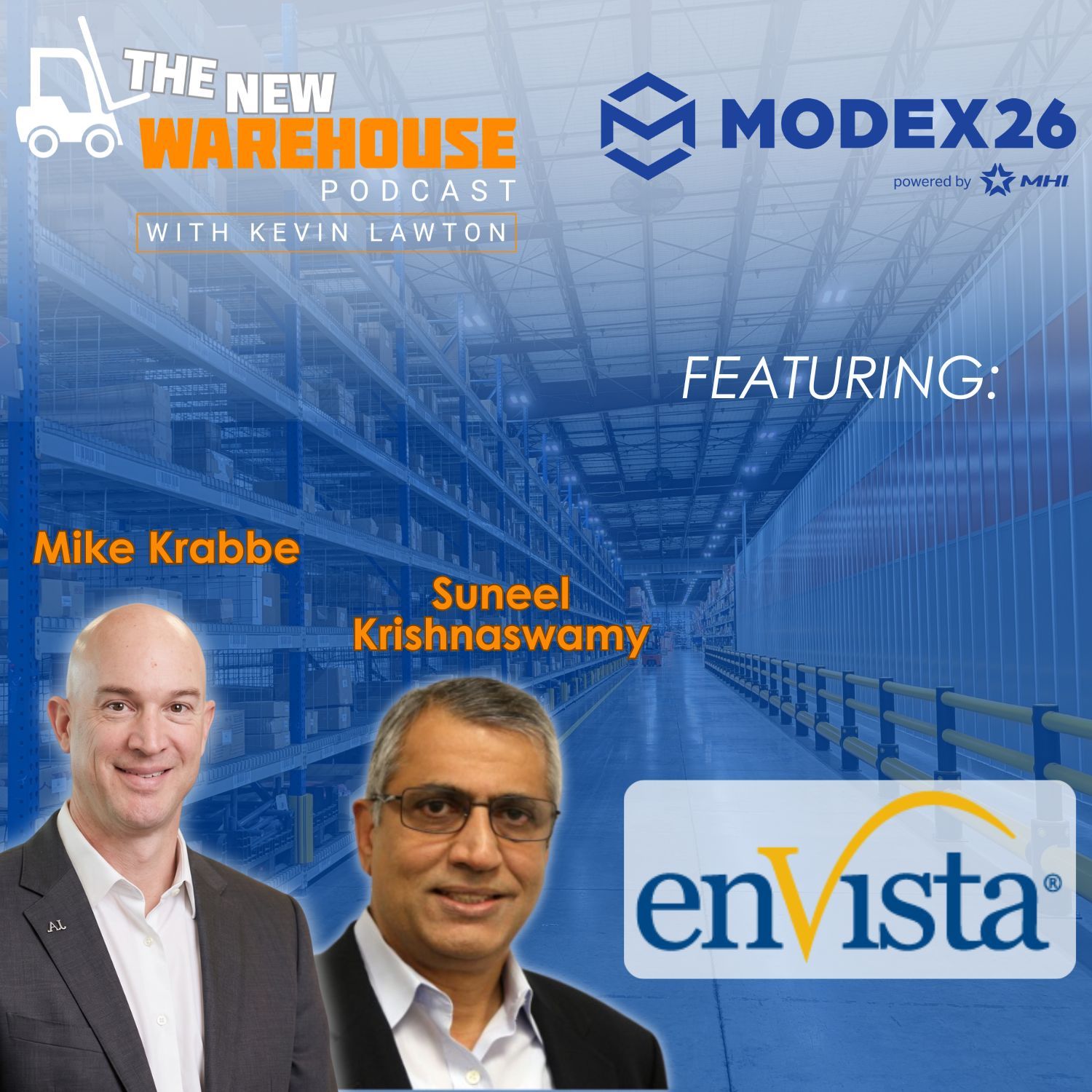
Warehouse Execution Systems: Optimizing People, Processes, and Automation
Welcome to this episode of The New Warehouse Podcast, where Kevin Lawton speaks with Mike Krabbe and Suneel Krishnaswamy from enVista live at MODEX 2026. The three of them explore how warehouse execution systems (WES) are helping operations connect automation, labor, and workflows into a more synchronized operation.
From digital twins and interoperability to robotic pallet building and pick-to-light systems, enVista shares how companies can scale automation without creating disconnected systems or operational bottlenecks.
Why Warehouse Automation Needs Orchestration
Automation has become far more accessible for third-party logistics and warehousing. However, adding more technology also creates more complexity across operations. That is where warehouse orchestration becomes critical.
As Suneel Krishnaswamy explains, “Now with that, you need something, typically a WES, that optimizes across people, processes, and automation.”
A WES sits between the WMS and WCS layers to coordinate workflows across labor, robots, AMRs, and automation systems. Krishnaswamy explains, “It’ll optimize and balance all of that to get maximum throughput for the warehouse.”
The conversation also highlights why interoperability matters more than ever. Many facilities now use automation from multiple vendors. Without orchestration, operations can create choke points or disconnected workflows. Krishnaswamy notes, “Having that total flow through the warehouse and optimizing it so that all the different parts of the system work synchronously… that’s the part that WES will orchestrate.”
Building Automation Roadmaps Without Starting Over
One major takeaway from the discussion is that companies no longer need to pursue massive “rip and replace” automation projects. Instead, many are gradually implementing automation while preserving future flexibility.
Krishnaswamy explains, “They want to do it in a very cautious and risk-averse way.” That cautious approach has increased the importance of a flexible WES layer. enVista’s approach allows companies to introduce automation step by step while maintaining consistent workflows. Krishnaswamy says, “It can give you a smooth ramp-up on automation once you have a good WES in place.”
The pace of innovation also continues to accelerate across warehouse automation. Krishnaswamy notes, “Since about 2015, the automation scene drastically changed. And the pace of new innovation for automation has taken off.”
That rapid innovation creates pressure for operators to remain adaptable. A strong orchestration layer helps warehouses evolve without becoming locked into outdated systems or infrastructure.
Digital Twins, Visibility, and Real-Time Optimization
enVista also showcased its digital twin and simulation capabilities during MODEX 2026. Krishnaswamy explains, “We can set it up and do a simulation with the customer’s order profile so they can actually see what to expect from that equipment for their profile.”
That visibility becomes especially valuable during seasonal peaks or changing order profiles. Instead of guessing how automation will perform, operators can validate assumptions before investing.
The discussion also covered enVista’s real-time digital twin capabilities. Krishnaswamy explains, “You don’t have to walk up to the floor and see what’s happening. You’ll be getting visibility right from wherever you are.”
One standout feature of enVista’s pick-to-light solution is the removal of traditional mechanical buttons to reduce operator fatigue. Krishnaswamy explains, “There’s no mechanical movement there, which obviously gives a lot more durability to the lights, and more importantly, less fatigue for the operators.”
Key Takeaways on Warehouse Execution Systems
- Warehouse automation is becoming affordable for smaller facilities, not just large operations.
- WES platforms help orchestrate labor, robots, AMRs, and automation into synchronized workflows
- Interoperability is critical as warehouses deploy automation from multiple vendors.
- A WES can help companies gradually scale automation without major operational disruption.
- Digital twins allow operators to simulate throughput and validate automation investments before deployment.
- Real-time visibility improves operational awareness and helps managers make proactive decisions.
Listen to the episode below and leave your thoughts in the comments.
Guest Information
For more information on enVista, click here.
To connect with Suneel Krishnaswamy on LinkedIn, click here.
To connect with Mike Krabbe on LinkedIn, click here.
For more information about warehouse execution systems, check out the podcasts below.
EPG Aura Brings AI Into Warehouse Execution