Forklift Automation: An Ideal Starting Point for Warehouses
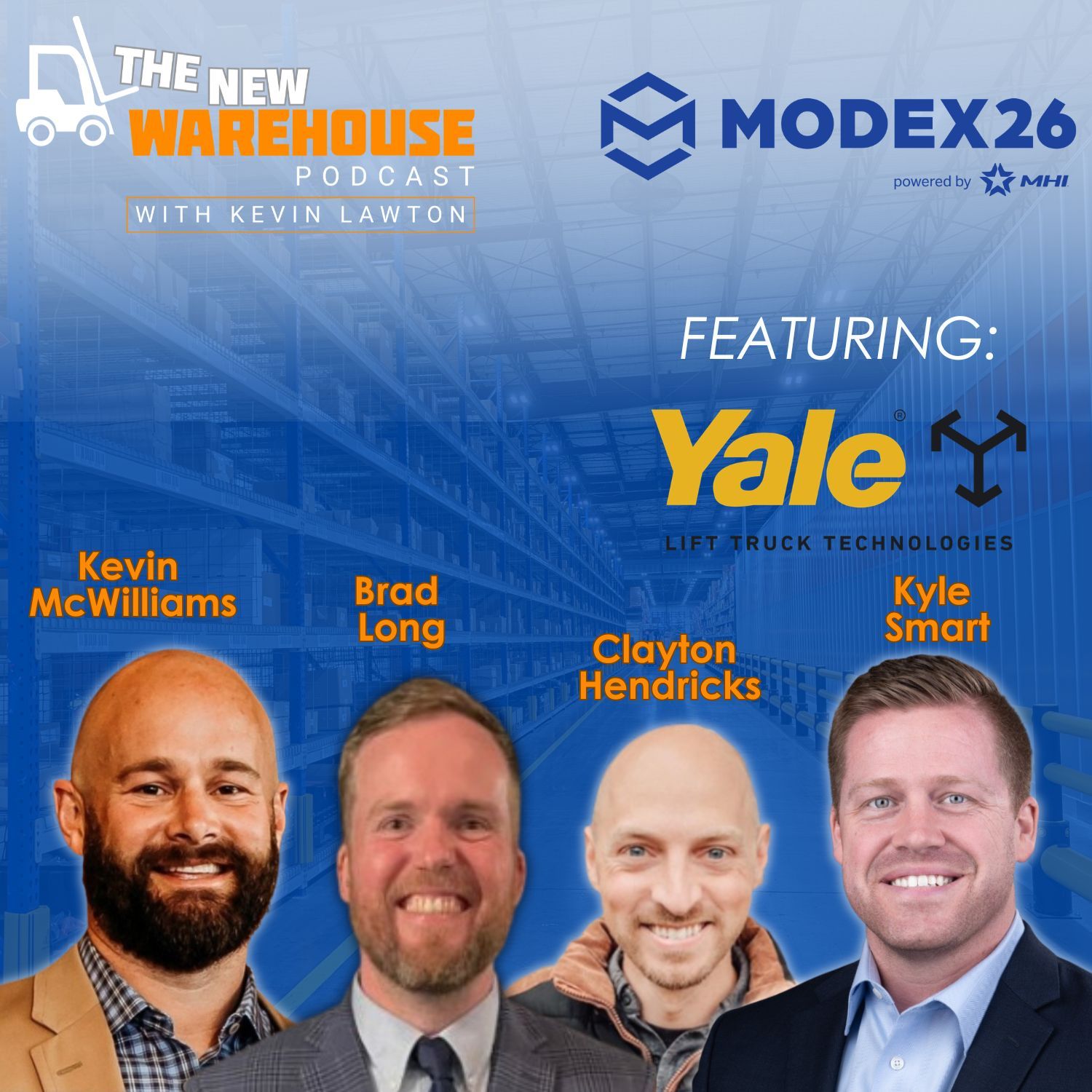
Welcome to our 700th episode of The New Warehouse Podcast. For this episode, we are going to Yale, forklifts that is. Kevin chats with leaders from Yale Lift Truck Technologies live at MODEX 2026. Featured guests include Brad Long, Kevin McWilliams, and Kyle Smart. They share how Yale is expanding beyond traditional lift trucks into broader warehouse automation solutions.
From safer forklift environments to faster deliveries and easier automation starts, the message is clear: modern warehouse automation can be incremental, flexible, and results-driven.
Forklift Automation Starts with Solving Real Problems
Many automation discussions begin with technology. Yale begins with workflow issues. Brad Long explained, “So we’re really focusing on building a best-in-class warehouse for today and tomorrow.” That framing matters because operators need results now, not only future concepts.
He also noted, “We’re thinking about end-to-end, right?” Yale’s focus stretches from warehouse movement to last-mile delivery pain points. Delays in the warehouse often lead to delays at the customer’s door.
Long added that at MODEX 2026, Yale is showcasing technologies “that are really changing the face of warehouse and last-mile logistics.” Warehouses increasingly need solutions that connect labor, movement, and final delivery execution. Strong automation strategies solve bottlenecks across the full chain, not in isolated zones.
Route Runner Targets Delivery Efficiency
Yale’s Route Runner addresses one of retail distribution’s hardest jobs: getting product from truck to shelf quickly. Kevin McWilliams described it simply: “The Yale Route Runner is a nested solution.” The sled fits into the pallet jack, then separates at the store. That allows outdoor movement and tighter indoor maneuvering with one system.
He added, “Reduces, touches, reduces step, reduces effort for deliveries.” Those gains matter when routes involve repeated stops and constant handling. Fewer touches can reduce fatigue and improve speed.
The ergonomic upside may be even bigger. McWilliams said, “When they don’t have to bend to the floor to lift cases, to put them back in the racks, they can take them off at waist height. It’s been a huge blessing.” The unit also provides 22 inches of lift. In labor-tight markets, equipment that reduces strain can support both retention and productivity.
Safer Operations and Easier Forklift Automation Adoption
Yale also demonstrated pedestrian awareness technology designed to help forklift operators quickly recognize people. Chad explained that the system helps an operator identify where pedestrians are located and respond accordingly.
He also noted it provides alerts “with a visual cue, with an audible cue.” Yale can also trigger truck deceleration through traction alert features. This layered approach supports awareness instead of replacing operator judgment.
In robotics, Kyle Smart introduced Yale Relay solutions and a new automated counterbalance stacker. He described a platform that supports “ease of implementation, getting started, with really drag and drop features.” He added, “It’s a great place for customers to get started… earlier in the automation journey.” That message will resonate with operators who want progress without overwhelming complexity.
Key Takeaways
- Yale Lift Truck Technologies is positioning itself as a broader warehouse automation provider, not only a forklift manufacturer.
- Yale emphasized end-to-end improvement, including warehouse flow and last-mile delivery.
- Route Runner combines pallet jack and sled functionality for faster store replenishment.
- The unit offers 22 inches of lift to improve ergonomics and reduce repeated bending.
- Driver retention was cited as a major customer concern.
- Pedestrian awareness cameras help operators detect nearby workers through visual and audible alerts.
- Yale Relay robotics focuses on low-complexity implementation and scalable adoption.
- The new automated counterbalance stacker targets low-level handling and end-of-line tasks.
Listen to the episode below and leave your thoughts in the comments.
Guest Information
For more information on Yale Lift Truck Technologies, click here.
To connect with Brad Long on LinkedIn, click here.
To connect with Kevin McWilliams on LinkedIn, click here.
To connect with Kyle Smart on LinkedIn, click here.
Scalable Warehouse Automation from OPEX » The New Warehouse
[…] Forklift Automation: An Ideal Starting Point for Warehouses […]