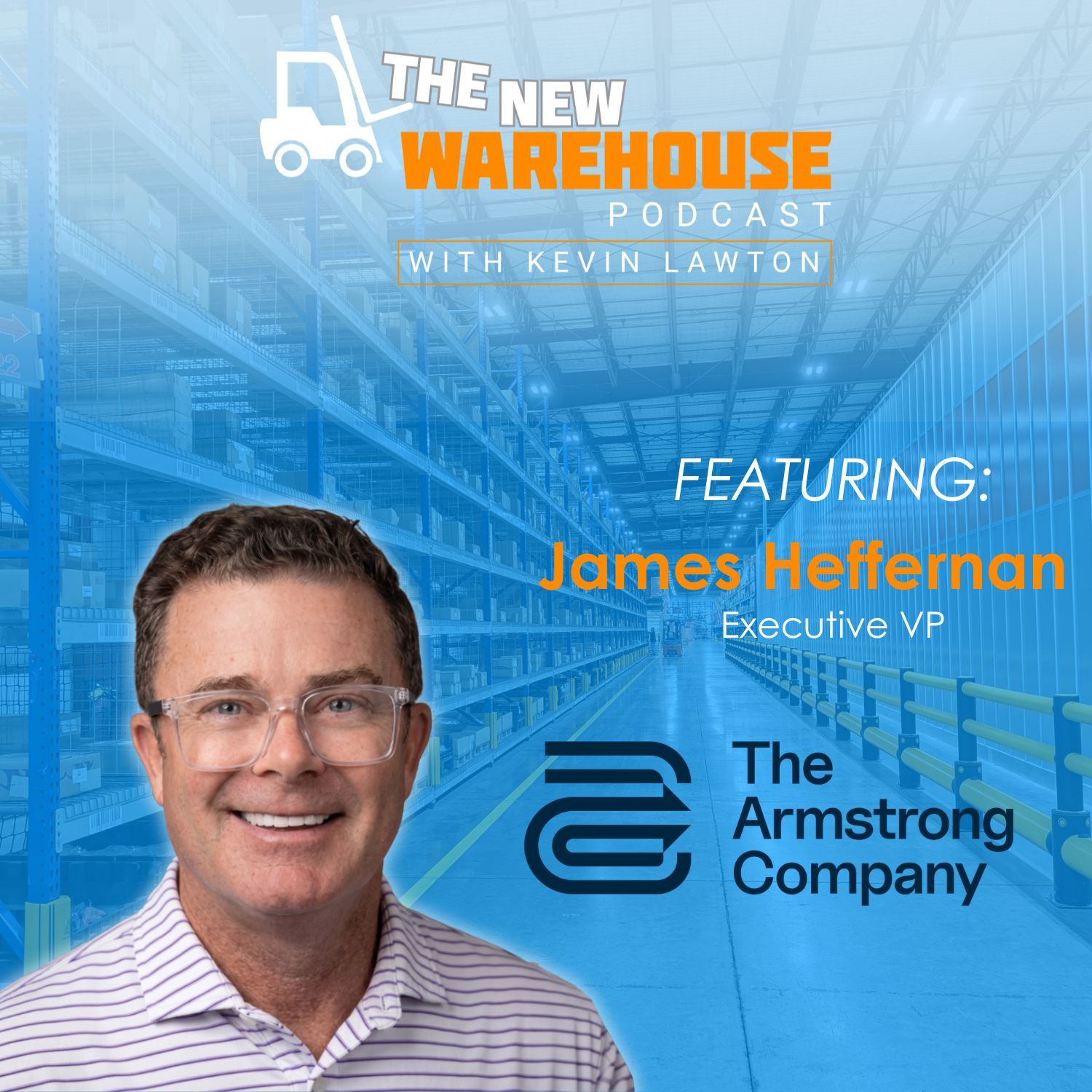
Leading Well at a 3PL: Jim Heffernan of The Armstrong Company
Welcome to this episode of The New Warehouse Podcast, featuring Jim Heffernan, Executive Vice President of Fulfillment at The Armstrong Company. Armstrong operates more than 150 physical locations nationwide, with Heffernan leading fulfillment operations from Southern California.
Drawing on more than 30 years in the industry, Heffernan explains why successful 3PL leadership starts with people. His approach to leading well at a 3PL centers on empowering teams, listening carefully to customers, and executing consistently.
Leading Well at a 3PL Requires Empowering People to Make Better Decisions
For Heffernan, strong 3PL leadership begins with giving employees room to make decisions. But empowerment does not mean operating without structure. His operational lesson is “empowering people to make decisions through a vetted process.” Planning meetings, account launches, and layers of operational redundancy help create that framework.
As any good leader will tell you, leadership requires staying close to the floor and being with the people. Heffernan says, “There’s not a day that I’m not out in the warehouse asking questions and making sure people are comfortable with what’s going on.” That type of visible leadership fosters a culture in which employees can raise concerns before they become customer problems.
He adds, “You’ve got to have competent people. They have to feel respected, empowered, compensated, and understand the end goal. That’s the culture.” That culture matters when Armstrong handles fulfillment services, from beauty kitting to large seasonal retail programs.
Develop Stronger Customer Relationships by Listening
Heffernan sees customer relationships as more than service after the sale. Leading well at a 3PL begins with understanding what the customer actually needs.
His advice is straightforward: “Don’t talk over them. Don’t try to counter them or impress them.” Customers may know the outcome they need without fully understanding the logistics required to achieve it. The 3PL’s role is to listen, interpret, ask questions, and translate those requirements into an executable supply chain solution plan.
Follow-through matters just as much. Heffernan says, “We will follow up. And you better damn right follow up, ’cause if you don’t, you’re dead in the water before you even realize the project is going.” For 3PL leaders, customer experience is shaped by what happens after the meeting. Responsiveness and execution help turn a sales conversation into a long-term relationship.
Building Long-Term Trust Through Consistency
Armstrong’s operations show why consistency matters. Its La Mirada fulfillment center facility spans 140,000 square feet and averages roughly 250 containers per week. Heffernan says plans call for expanding the operation to 350,000–400,000 square feet and eventually handling more than 1,500 containers.
But customers do not experience that complexity the same way the warehouse does. Heffernan puts it plainly: “The client doesn’t want to know about the challenges of receiving at inbound. The client wants to know about getting POs out and getting them to the end retailer.” For a 3PL, strong execution means absorbing that operational complexity without making it the customer’s problem.
That discipline helps explain how long-term relationships are built. As Heffernan later says, “You get these clients predominantly by performing one job at a time.” Trust is earned through repeated execution, especially when the operation is under pressure.
Lessons on Leading Well at a 3PL
- Empowerment needs structure – Give employees authority to make decisions, supported by clear processes, planning, and accountability.
- Stay connected to the warehouse – Regularly asking questions helps leaders understand problems before they reach the customer.
- Listen before selling – Leading well at a 3PL begins with understanding and interpreting the client’s actual requirements.
- Follow-through builds trust – Responsiveness after the sales conversation can be just as important as the pitch itself.
- Consistency creates long-term relationships – Large accounts are retained by executing one job at a time, not simply winning the initial contract.
Listen to the episode below and leave your thoughts in the comments.
Guest Information
For more information on The Armstrong Company, click here.
To connect with Jim Heffernan on LinkedIn, click here.
For more information on leading well at a 3PL, check out the podcasts below.
3PL Leadership: Build Culture Before Adding Technology
Barrett Distribution Centers: How 3PLs Build Trust to Retain Brands