Cold Storage Warehouse Automation: Insights from TGW
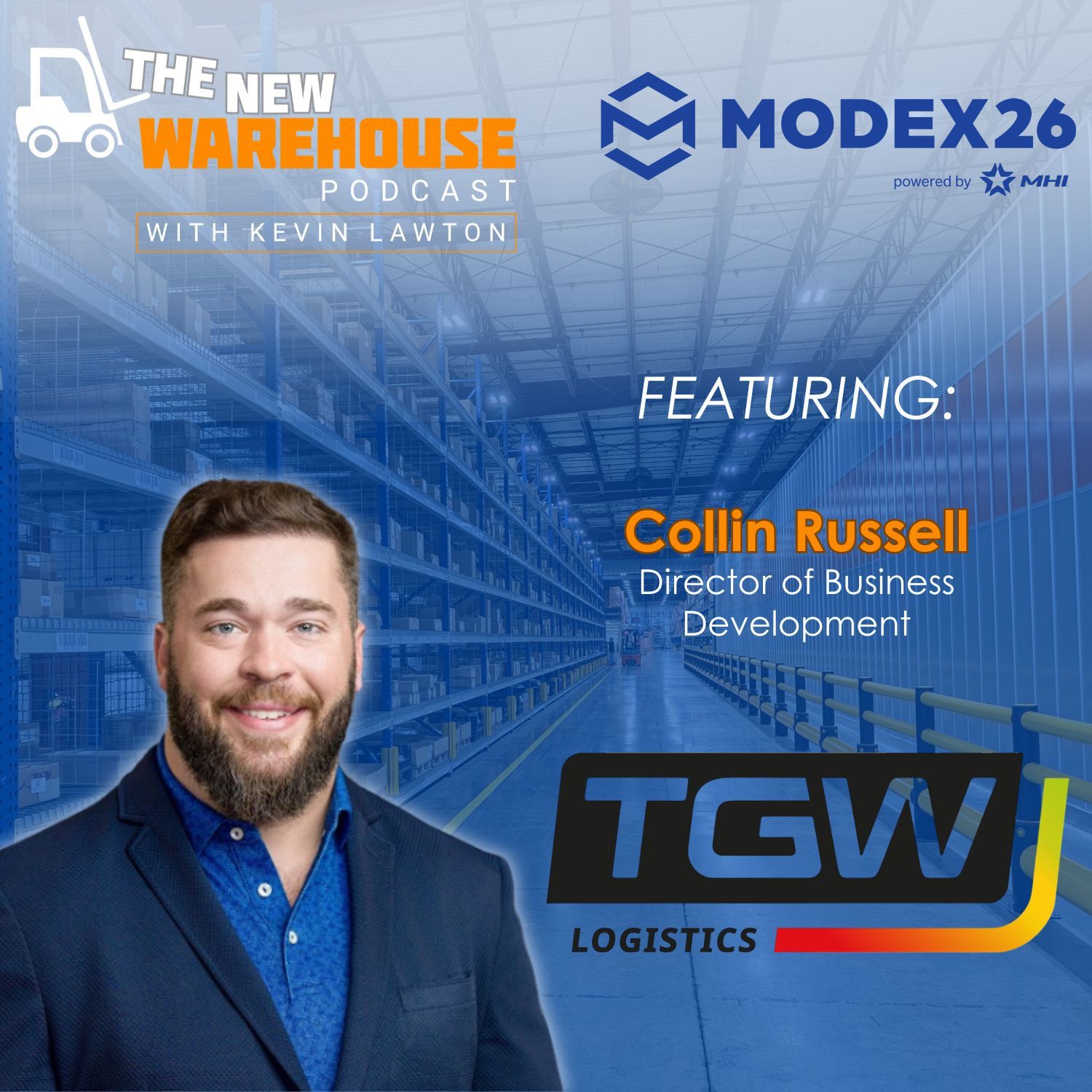
This episode of The New Warehouse Podcast takes a trip down the freezer aisle. Kevin chats with Collin Russell of TGW Logistics Group to explore how frozen and refrigerated operations are approaching automation differently from traditional warehouses.
Russell shares insights into labor and facility upgrades related to cold storage warehouse automation. The discussion also highlights how automation decisions increasingly center on throughput, uptime, and operational resilience rather than simply reducing labor.
Cold Storage Operations Are Driving Automation Demand
Cold storage warehouse automation is no longer limited to massive greenfield projects. Grocery and food service companies are actively reevaluating existing facilities while expanding into new markets. Russell explained that many operators are balancing brownfield modernization with greenfield expansion initiatives.
According to Russell, “They’re trying to alleviate the labor issues that they’re having internally, especially within their frozen, temperature zones, ’cause they have a high turnover rate in there.” He added, “Not too many people want to sign up and work in minus 15 degrees Fahrenheit.”
They also want to improve routing efficiency, increase outbound capacity, and serve more customers without dramatically expanding headcount. Russell pointed to growing interest in automation among major grocery operators, such as Kroger and Albertsons, as they seek to improve warehouse and transportation performance.
Full Automation Is Not Always the Right First Step
Many warehouse leaders arrive at trade shows looking for fully automated solutions. Instead, Russell encourages operators to match automation investments to operational realities and maturity levels.
Russell explained, “Sometimes you don’t necessarily need to go that route, even if you’re just trying to dip your toe in. Sometimes it’s better to do a semi-automated option.” He also stressed that operators should avoid feeling locked into massive capital projects too early. “You can still explore some semi-automated options, dip your toe in, get a little bit more experience with the technology, and then at a later time, maybe upgrade it.”
Russell described TGW’s “one-touch receiving” vision, in which products are physically touched only during unloading and loading. Everything in between becomes system-driven. Yet even with that vision, he acknowledged the industry still faces limitations around automated truck unloading, especially in frozen environments where damaged packaging and shifting freight create challenges for robotics.
Reliability, Maintenance, and Commissioning Matter More Than Hype
Automation success depends heavily on maintenance planning, redundancy, and realistic implementation expectations. Russell noted that many companies underestimate the long-term operational support required after installation.
Russell explained, “The best scenario is, hey, let us manage it.” He also shared how TGW reduces catastrophic downtime. “We like to build in that redundancy throughout the entirety of the system so you’re not married to just one aisle, one palletizer, one set solution.”
Cold-storage installations require multiple commissioning stages because steel contracts as temperatures drop. Russell noted, “Once it’s at temperature, you have to go back in and recommission it because all that steel shrank.” He offers sage advice for operators evaluating an automation provider. “Don’t just buy a product, really explore the solution.”
Key Takeaways on Cold Storage Warehouse Automation
- Grocery and foodservice operators are heavily investing in cold storage warehouse automation to address labor shortages and increased throughput demands.
- Brownfield modernization projects are becoming increasingly common alongside greenfield expansion efforts.
- Semi-automated systems can provide meaningful operational improvements without requiring full automation immediately.
- Many cold storage automation projects range from $5 million to more than $200 million.
- ROI expectations for automation projects are typically set within 3 to 5 years.
- Redundancy planning is critical to minimizing downtime in automated facilities.
- Cold storage commissioning requires multiple phases because steel contracts as temperatures drop.
- Automated truck unloading remains one of the industry’s biggest long-term opportunities.
Listen to the episode below and leave your thoughts in the comments.
Guest Information
For more information on TGW, click here.
To connect with Collin Russell on LinkedIn, click here.
For more information about cold storage warehouse automation, check out the podcasts below.
Smart Warehouse Technologies Driving Real-Time Operations
Harnessing Technology to Advance Cold Storage Operations at Lineage
Frozen Fulfillment: Cost, Data, and Transportation Waste » The New Warehouse
[…] Cold Storage Warehouse Automation: Insights from TGW […]