Tackling the Challenges of Hiring Frontline Employees
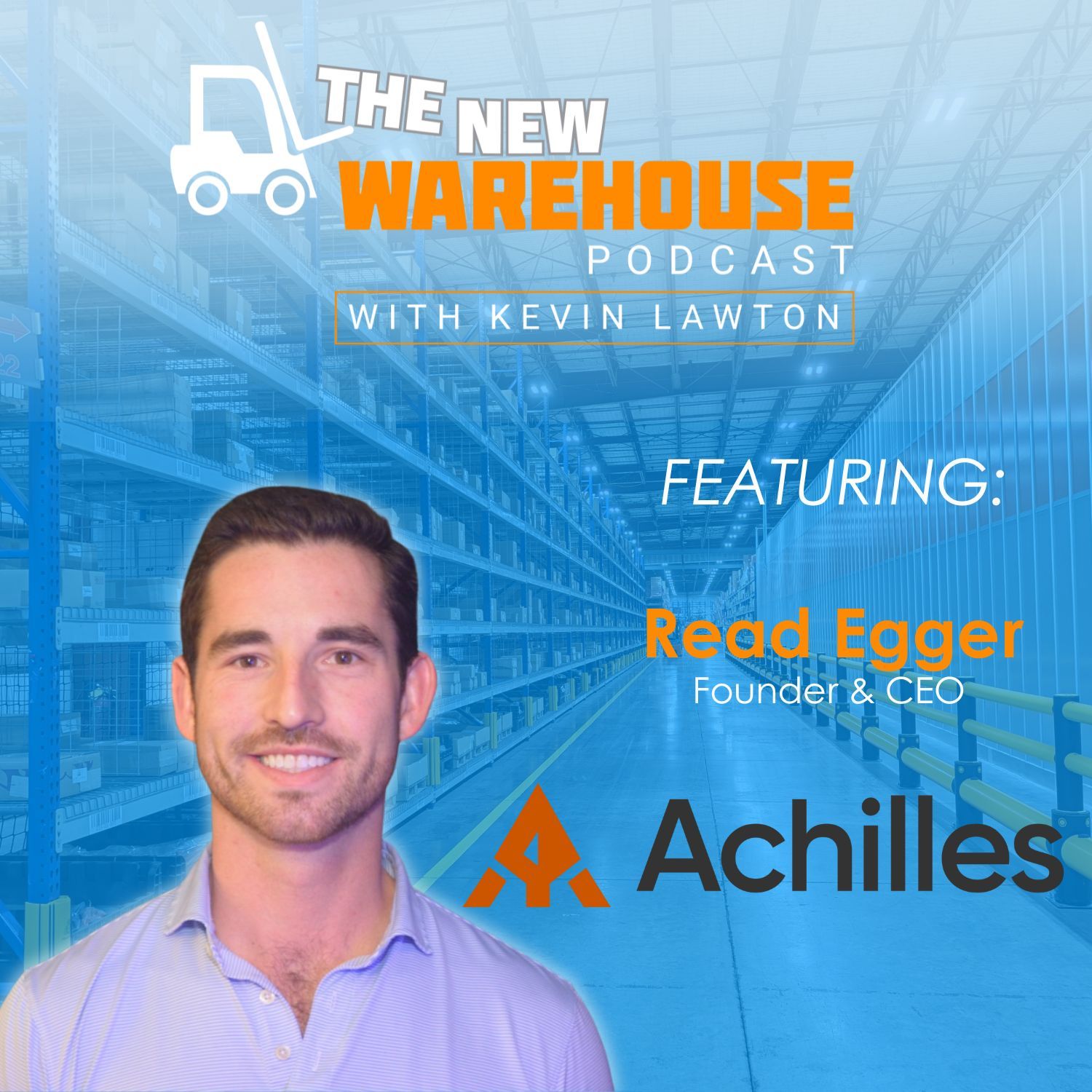
Welcome back to The New Warehouse Podcast. In this episode, host Kevin welcomes Read Egger, Founder and CEO of Achilles, to discuss how AI improves hiring frontline employees. Egger shares insights from over a decade in industrial and staffing environments, explaining why traditional hiring models fail hourly workers.
The episode also includes a live demonstration of Sam in action. During the conversation, Egger has Sam call Kevin and walk through a real-time screening, giving listeners a firsthand look at how the AI recruiter sounds, responds, and adapts in a realistic hiring scenario.
Be sure to listen to the full episode to see if Kevin passes the screening.
Rethinking Frontline Hiring From the Ground Up
Frontline hiring often breaks down because systems were not built for hourly work. Legacy HR tools fail to match that reality. “The best candidates you want typically are working during the time that HR team members or recruiters are working.” That disconnect slows hiring and frustrates candidates. Response times stretch into days or weeks. Many never hear back.
Egger points out another major issue affecting outcomes. “Non-English speaking candidates typically have a lower rate of response, and their being considered as a candidate for a role basically is cut in half.” Achilles was built to remove those barriers. The goal is faster engagement without sacrificing quality or fairness.
Introducing Sam: An AI Recruiter Built for Reality
At the center of Achilles is Sam, an AI recruiter designed to support hiring frontline resources. Egger is clear about the problem Achilles set out to solve: “The mission is to help hire better for full-time workforces and also significantly increase the candidate experience.” That mission matters most in environments where hiring is only one of many responsibilities.
Sam also improves the candidate experience through real-time, human-like interaction. Egger shared a real example: “ You could be asking questions about the job, about the company, information related to that, so that the candidate can actually get that true, human-like experience.” As Egger notes, “There’s something to be said for a company that was built AI native versus a company that is built with legacy software, and then you throw AI on it.” By connecting directly to company benefit documents and internal knowledge centers, Sam can answer the same questions a recruiter would, including common FAQs that often surface after hours.
When Hiring Frontline Employees Competes With Everything Else
For many warehouse and industrial teams, recruiting competes with critical HR functions. Egger explains, “Typically, if you’re only hiring one to two people a month, you don’t have a dedicated recruiter. So it’s either an HR generalist, an HR business person, or the actual operator themselves doing the screening. All of those roles have so many different responsibilities. So if you’re doing open enrollment as an HR business partner, then recruiting takes a pause.” Sam fills that gap by handling screening and engagement without pulling people away from their core work.
Egger highlights how many candidates drop out before submitting applications. “About 85 to 92% of applicants that click apply and don’t make it to submit.” Achilles customers see measurable improvements. “We were able to increase their applicants… by 3x, like 300% increase in the applicants.”
Even more impactful is conversion. “The rate of hire for a new applicant was 2.25 x higher when they came through our call and text to apply.” Candidates can apply, screen, and schedule interviews entirely by text or voice. That convenience changes outcomes for both sides.
Key Takeaways on Hiring Frontline Employees
- Frontline candidates primarily apply via mobile, yet many hiring systems are not built for mobile-first workflows.
- 65% of applicants never hear back, and 85–92% drop off before submitting due to friction and slow response times.
- Spanish-speaking candidates face significantly lower response and consideration rates in traditional hiring processes.
- AI-native hiring platforms outperform legacy systems by enabling faster engagement and consistent screening.
- Customers using call-and-text workflows saw 300% more applicants and a 2.25x higher hire rate.
Listen to the episode below and leave your thoughts in the comments.
Guest Information
For more information on Achilles, click here.
To connect with Read Egger on LinkedIn, click here.
For more information on hiring frontline employees in warehousing, check out the podcasts below.
592: Supply Chain Talent Is the Competitive Edge in 2025
Live from WERC: The Future of Warehouse Distribution, Technology, and Workforce Innovation
611: Instawork is Tackling Warehouse Talent Shifts with Flexibility and Data