IC to Electric: 90% Fuel Savings, Lower Maintenance, and Smarter Forklift Decisions
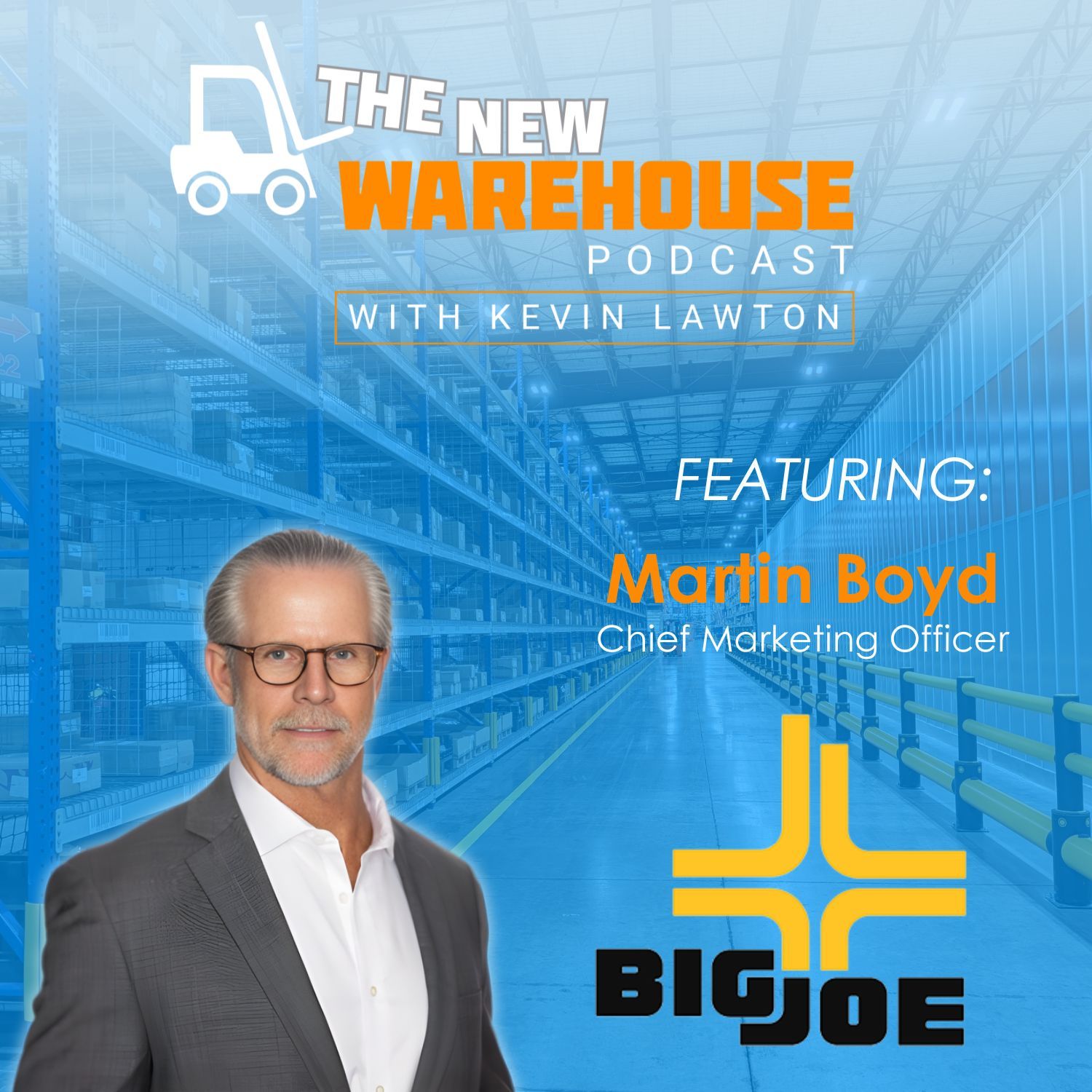
In this episode of The New Warehouse Podcast, Kevin chats with Martin Boyd of Big Joe Forklifts about one of the most important shifts happening in material handling today. Big Joe has built its reputation on simple, cost-effective electric equipment and is now pushing deeper into lithium-powered solutions. The conversation centers on what it really takes to transition from internal-combustion to electric forklifts. More importantly, it explores why many operations hesitate, what has changed in technology, and how companies can make the transition without overspending or sacrificing performance.
Why the Shift from IC to Electric Is Happening Now
The move toward electrification isn’t new, but the conditions finally make it practical. For years, operations stuck with propane or diesel because electric options lacked power or flexibility. That’s no longer the case.
As Boyd explains, “the technology has really reached a point where moving from IC to electric makes sense.” Lithium-ion batteries have changed the equation. “The cost of lithium has calmed down, and it’s allowed operations using internal combustion to completely leapfrog over older technology and go right into lithium-based technology.” This move delivers consistent power, faster charging, and longer runtime.
Cost is also driving the shift. Fuel and maintenance continue to eat into margins. Boyd points out that “you’re looking at probably a 90% reduction in fuel savings going from propane to electric.” That kind of reduction forces leaders to take a closer look. Add in a 40–60% drop in maintenance, and the financial case becomes difficult to ignore.
What Still Gets in the Way of Electrification
Even with better technology, many operations hesitate. The biggest barrier isn’t performance. It’s understanding. Boyd is clear on this point: “One of the challenges we see is just awareness.” Many teams still view electric as underpowered or risky. There’s also a lingering fear tied to uptime. As he puts it, “there’s always this fear that the forklift is gonna run out of juice.” That perception slows decision-making, even when the data says otherwise.
Another issue is how solutions are sold. Electrification isn’t just swapping equipment. It requires a different conversation around energy use, charging behavior, and fleet sizing. Boyd notes that “Moving to electric is a completely different discussion.” Without the right guidance, buyers default to oversizing batteries and chargers, which unnecessarily drives up costs.
This creates friction. Operators either delay the transition or invest more than necessary. In both cases, the value of electrification gets lost.
How Data-Driven Decisions Change the Equation
The most effective transitions start with data. Understanding how trucks are used day to day allows operators to right-size their electric fleet. Boyd emphasizes a practical approach: “We will use data to show you that it’s possible.” Instead of guessing, teams can analyze duty cycles, charging windows, and energy consumption. This eliminates the need to overbuild the solution.
That’s where many operations go wrong. Boyd warns, “When you oversize the battery and you oversize the charger, you pay a lot of money.” The goal isn’t to buy the biggest system. It’s to find the right one.
Lithium technology also supports this shift. Frequent, fast charging becomes an advantage rather than a limitation. As Boyd explains, “Lithium loves to be charged. It loves to be charged fast; it loves to be charged often.” That flexibility allows operations to maintain uptime without excess capacity. In the end, data turns uncertainty into confidence. It changes the conversation from risk to optimization.
Key Takeaways
- Lithium-ion enables a practical shift from IC to electric forklifts
- Up to 90% reduction in fuel costs when switching from propane
- 40–60% reduction in maintenance costs with electric fleets
- Electrification requires a different buying and operational mindset
- Awareness and education remain the biggest adoption barriers
- Fear of downtime still slows decision-making despite improved performance
- Oversizing batteries and chargers is a common and costly mistake
- Data-driven analysis helps right-size fleets and reduce upfront spend
Listen to the episode below and leave your thoughts in the comments.
Guest Information
For more information on Big Joe Forklifts, click here.
To connect with Martin Boyd on LinkedIn, click here.
For more information about moving from IC to Electric, check out the podcasts below.
Forklift Industry Future Unveiled: NOBLELIFT Live from ProMat
How Forklift Tires Impact Warehouse Safety and Performance
Getting the Right Forklift Tire Fit for Safety and Performance