Product Identification Across the Supply Chain
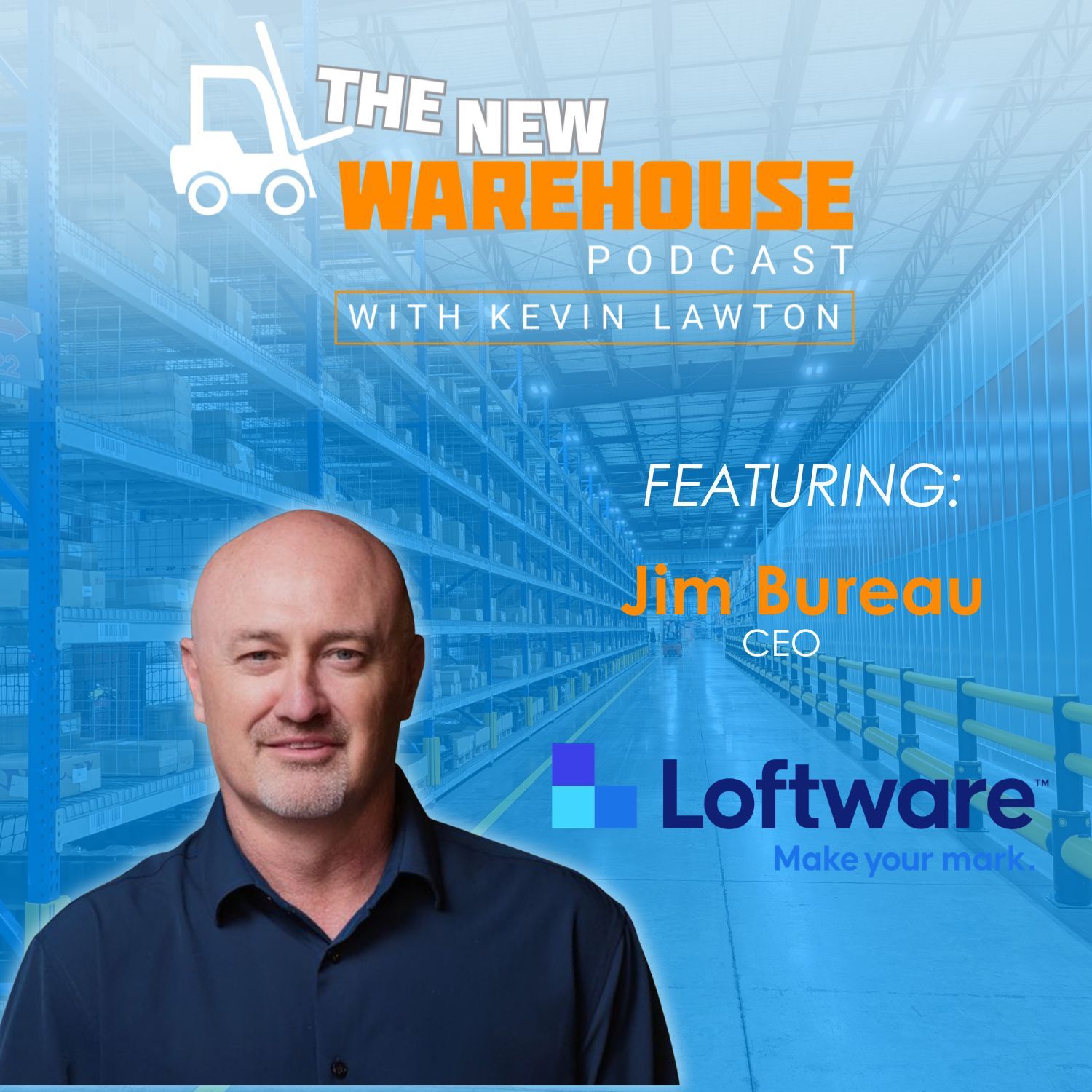
In this episode of The New Warehouse Podcast, Kevin Lawton chats with Jim Bureau, President and CEO of Loftware, about why product identification sits at the center of modern supply chain operations. With nearly 40 years in the market, Loftware has seen identification evolve from basic labels to a strategic enabler of collaboration, automation, and visibility.
Jim shares how connected packaging, standardization, and cloud-based systems help organizations break down internal and external silos while reducing costly disruptions. The conversation also explores the human side of automation and what’s next for identification technologies across manufacturing, life sciences, and consumer goods.
Product Identification as the Foundation of Visibility
Product identification plays a critical role in the movement of goods through global supply chains. Jim explains that identification is no longer just about printing labels; it’s a digital transformation with labeling. It is about ensuring accuracy, compliance, and traceability from the supplier to the end customer. As he puts it, “it’s how product identification gets right across the supply chain.” That mindset has driven Loftware’s focus on connected packaging, which links identification data across internal systems and trading partners.
This approach delivers measurable impact. Jim notes that “in essence, it ensures you have authentic, compliant and traceable products across your trading partners and internal operations,” adding that the outcome is significant cost savings. When identification data is consistent and accessible, organizations gain real-time insight into where products are, what they contain, and how they should move. That visibility reduces errors, supports compliance, and improves customer trust across complex, global networks.
Breaking Down Silos with Standardization and Collaboration
One of the biggest challenges Jim sees is the fragmentation caused by disconnected systems and formats. In many operations, relabeling happens as soon as goods are received, to make them usable internally. Jim observes, “The very first thing that people do when they are receiving goods is they relabel them.” This adds time, cost, and risk across the supply chain.
The problem compounds at scale. Jim describes manufacturers managing thousands of suppliers, each with different requirements. “If I want those five to six thousand suppliers to take the format that I need, I literally need to send an email out to five thousand individuals,” he explains. That effort creates delays and uncertainty, especially when changes are inevitable. Standardization and shared specifications offer a way forward. By publishing formats once and enabling role-based access, companies can collaborate without constant rework, keeping goods moving without disruption.
Automation, Humans, and the Future of Identification
Automation is reshaping warehouses and factories, but Jim emphasizes that people remain central to success. Identification data enables automation by acting as what he calls the key. “The label and how you identify that product becomes the key that unlocks the ability to do all your automation.” When systems share accurate identification data, organizations can manage by exception rather than resort to manual intervention.
Looking ahead, Jim is especially excited about standards like GS1 Digital Link. These technologies use a single identifier, such as a QR code, to unlock different data depending on who scans it. This creates a flexible, scalable model for identification across industries. Combined with cloud platforms and intuitive interfaces, identification systems can become easier to use and more powerful. As Jim notes, systems must feel familiar and accessible because adoption drives value.
Key Takeaways on Product Identification
- Product identification is the foundation for visibility, compliance, and automation across the supply chain.
- Relabeling and disconnected formats create unnecessary cost, delay, and risk
- Standardization and shared specifications reduce friction between trading partners.
- Accurate identification data enables automation while keeping humans focused on higher-value work.
- Emerging standards like GS1 Digital Link will expand the role of identification across industries.
Listen to the episode below and leave your thoughts in the comments.
Guest Information
For more information on Loftware, click here.
To connect with Jim Bureau on LinkedIn, click here.
For more information about product identification across the supply chain, check out the podcasts below.
Amazon FBA Prep Services: A High-Velocity Approach from ZonPrep
Warehouse Digital Transformation: Bridging ERP and the Warehouse Floor