Warehouse Continuous Improvement at Atomix: Culture and Data
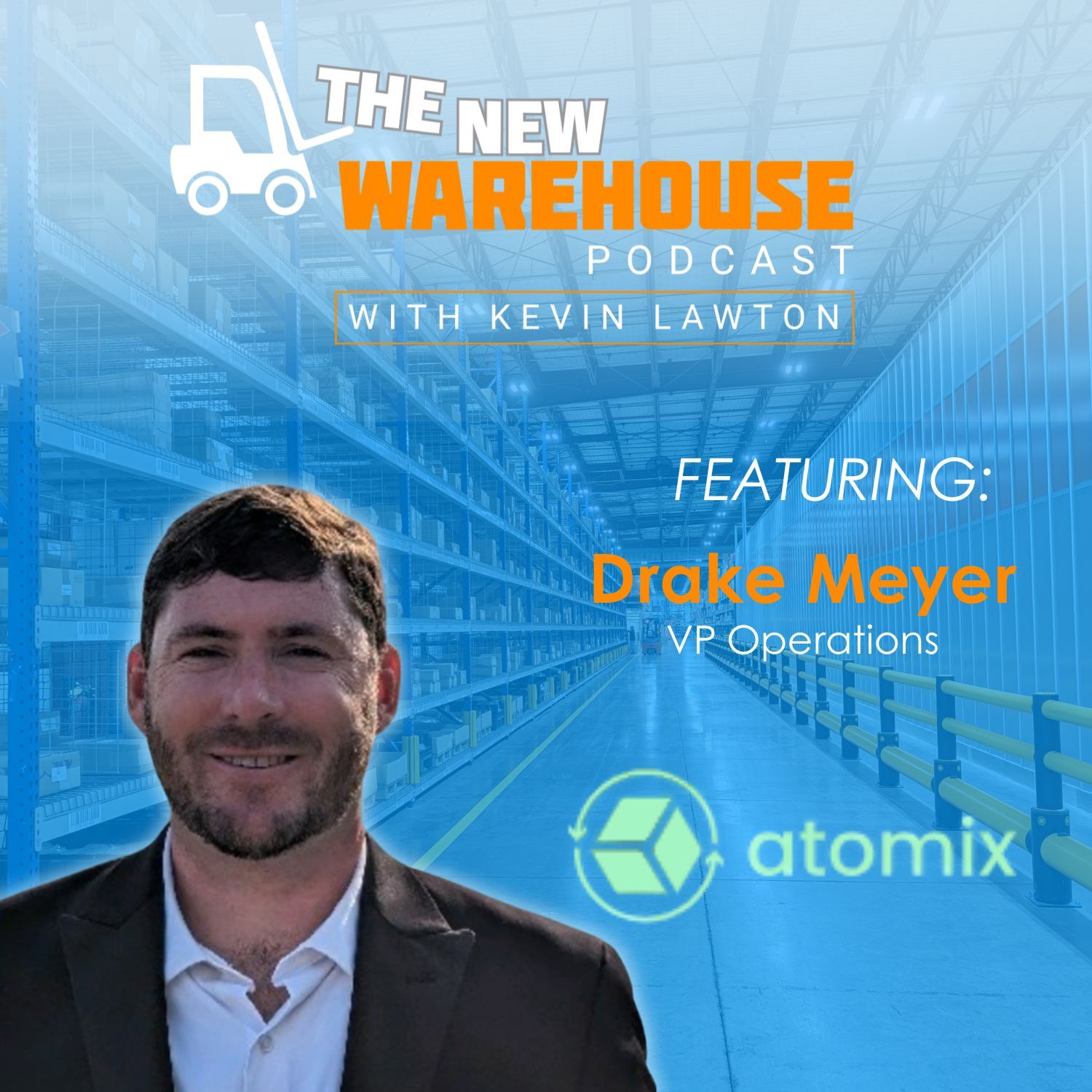
In this episode of The New Warehouse Podcast, Kevin chats with Drake Meyer, VP of Operations at Atomix. Atomix is a fast-growing 3PL with locations in Milwaukee, Salt Lake City, and Baltimore, and it operates on its own in-house WMS. Drake shares his path from forklift driver to executive leadership and explains how warehouse continuous improvement drives performance.
The conversation covers culture, WMS strategy, robotics, AI, and practical lessons from large-scale operational transformations. From reducing audit labor to building a data-first mindset, Drake offers grounded insights for warehouse leaders focused on sustainable growth.
Culture Is the Engine of Continuous Improvement in the Warehouse
For Drake, improvement begins with mindset. He describes operations as dynamic and hands-on, not theoretical. Leadership requires engagement at every level. As he explains, “If you have the right culture and you’re empowered, it really is just trying to fix a big puzzle every day. Every day there’s something different to fix.”
Drake emphasizes consistency over big swings—incremental gains compound. “Every day, I can do something better for the team, the processes, even just getting to know the team a little bit more every day. You’ll look back and have done something to make it better.” That philosophy drives accountability. “ If you get the team on board with that, they start doing that, and now people are hunting for the inefficiencies.” That mindset creates contagious improvement.
Continuous Improvement: Technology Follows Process
Atomix operates its own in-house WMS, which offers flexibility unavailable in many off-the-shelf systems. As Drake puts it, “I’ve had off the shelf where it’s like just frustrates you so much. You can’t get a certain piece of data, or you can’t do a process a different way.” Drake values adaptability and fast iteration.
At Atomix, that data discipline continues. Drake explains, “Data is the most important piece of our operation.” He adds, “We have all the data, like we know all the clicks when everything happened, who touched what, when, and now we just gotta figure out how to read it and what we want to know.” Ownership of the WMS enables faster iteration and operational insight.
It allows faster iteration driven by real operator behavior. Drake emphasizes that their tech team can quickly build and adjust features based on how pickers and packers actually work. He explains that the system is “hungry” for operational input, enabling the team to close loopholes and design workflows that reduce shortcuts and errors.
When it comes to advanced technologies, he cautions, “I think first you gotta have, you know, all your processes buttoned up and your team pretty solid before you try to add something like that.” Culture and process maturity determine whether technology delivers ROI. Tools accelerate strong operations. They do not fix broken ones.
Key Takeaways from Atomix
- Warehouse continuous improvement requires systems that adapt to real operations. Atomix built its own WMS because off-the-shelf platforms limited how processes could evolve.
- Owning the WMS means owning the data. Atomix tracks every click, touchpoint, and timestamp, enabling deeper visibility into labor, throughput, and cost drivers.
- Process optimization comes before technology. Atomix prioritizes disciplined workflows and operator behavior before layering in AI, automation, or robotics.
- People and culture determine whether improvement sticks. Empowered teams that solve problems daily create momentum that technology alone cannot generate.
Listen to the episode below and leave your thoughts in the comments.
Guest Information
For more information on Atomix, click here.
To connect with Drake Meyer on LinkedIn, click here.
For more information about warehouse continuous improvement, check out the podcasts below.
Foundational Excellence in Warehouse Operations
Warehouse Fulfillment Strategy for a Changing Consumer Landscape

The New Warehouse Monthly Huddle: February 2026 » The New Warehouse
[…] ATOMIX brought it back to culture: “If you have the right culture and you’re empowered, it really […]