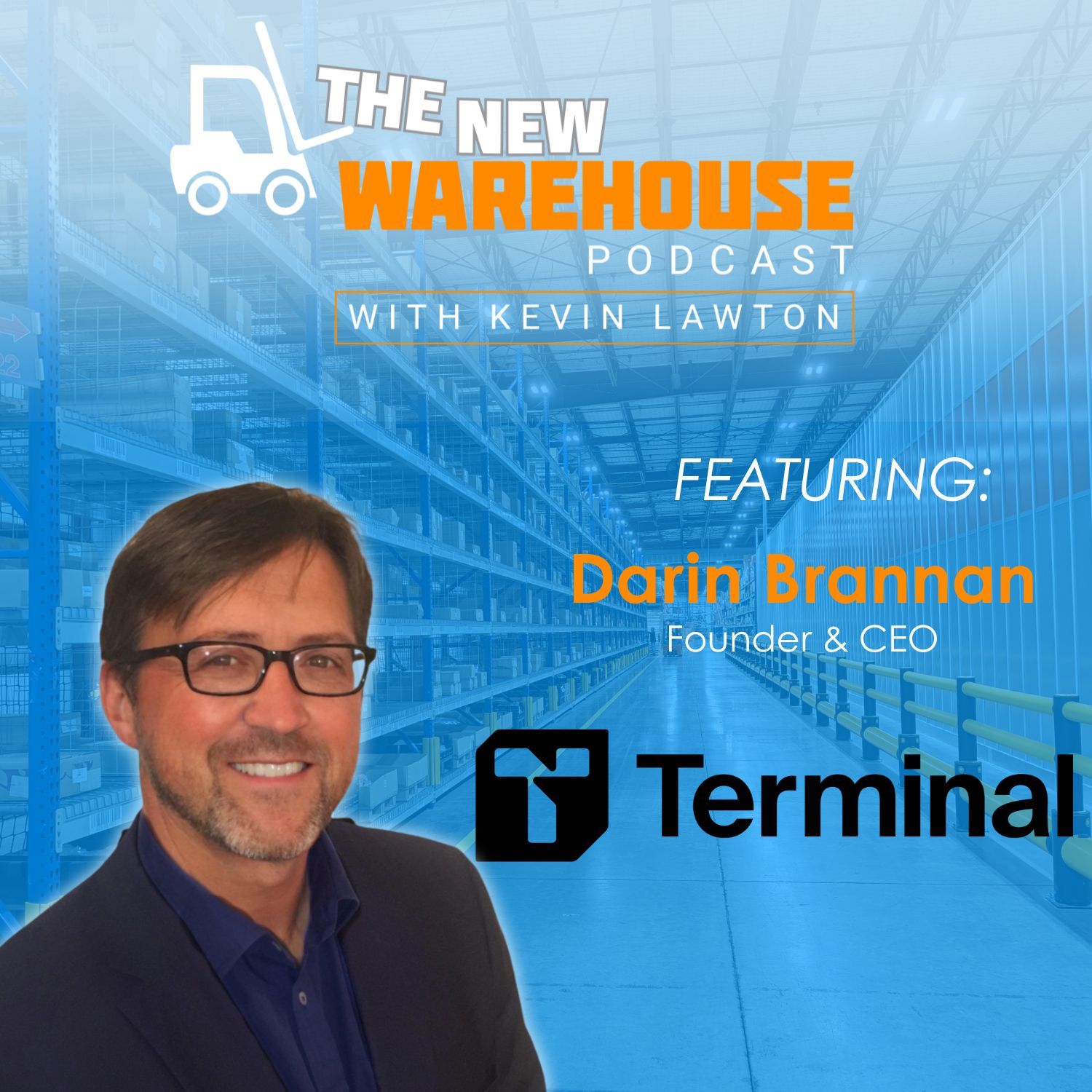
Yard Automation and the Future of the Yard
Welcome back to The New Warehouse Podcast. In this episode, Kevin chats with Darin Brannan, CEO of Terminal Industries, about why yard automation has become a critical missing link in supply chain modernization. Brannan shares how Terminal Industries is rethinking the yard as a data-rich, automated environment rather than a manual afterthought.
The conversation explores why yards have lagged behind warehouses in technology adoption, how computer vision and AI are changing that reality, and what the future holds for autonomous yard operations. Together, they unpack the operational, financial, and strategic impact of treating the yard as a true extension of the warehouse and transportation network.
Yard Automation Starts with Visibility
Yard automation begins by recognizing how outdated most yard operations still are. Brannan points out that many yards rely on processes that have barely changed over the past decades, even as warehouses have rapidly modernized. As he explains, “I think the yard is probably the most under-modernized node in the supply chain.” That gap creates congestion, delays, and wasted capacity that ripple across transportation and warehouse operations.
Despite moving massive volumes, yards remain under-instrumented. Brannan highlights that “less than 25% of the yards have adopted tech and automation, while the warehouse is closer to 80-85%.” This imbalance limits throughput and makes it difficult to measure actual performance. Without real-time data, operators rely on estimates rather than facts. Yard automation replaces guesswork with visibility, capturing arrival times, dwell times, and asset locations. That visibility becomes the foundation for better decisions, tighter schedules, and faster truck turns.
Why Data Dies in the Yard
A central challenge in yard automation is data capture. Brannan describes the yard as a blind spot between transportation and the warehouse, noting that “oftentimes the yard is this black hole where data goes to die.” When arrivals, departures, and movements are tracked on paper or spreadsheets, critical insights are lost. This missing data hides inefficiencies and weakens the business case for improvement.
Brannan emphasizes how damaging that gap can be, explaining that “your operators don’t even realize how much critical data they’re missing.” Without accurate timestamps or asset locations, delays compound quickly. Trailer dwell time increases. Dock schedules drift. Yard congestion spreads.
Terminal Industries addresses this by using computer vision to capture events as they happen automatically. The result is trusted, structured data that reflects reality. With that data, operators can stabilize dock schedules, stage labor more effectively, and uncover opportunities to unlock additional value from existing warehouse systems.
Yard Automation and the Path to Autonomy
Looking ahead, yard automation is also a prerequisite for autonomy. While autonomous vehicles and robotics continue to advance, Brannan stresses that automation cannot function in isolation. As he puts it, “autonomy shouldn’t just sort of stop at the gate.” Without coordination inside the yard, advanced systems revert to manual handoffs and exceptions.
Terminal Industries is building toward what Brannan calls a “lights out yard,” a self-managed logistics hub operating continuously with minimal human intervention. He explains that “without an AI-driven smart yard platform, autonomy sort of collapses and goes back to manual handoffs and exceptions.”
Yard automation provides the orchestration layer that connects trucks, docks, and assets in real time. Early results already show dramatic improvements, including faster gate check-ins and reduced dwell times. Over time, these capabilities set the stage for fully autonomous, data-driven yard operations.
Key Takeaways
- Less than 25% of sites have adopted yard automation.
- Yard inefficiencies contribute to wasted capacity and reduced truck utilization.
- Missing yard data hides dwell time, congestion, and asset location issues.
- Computer vision enables real-time, automated data capture without manual scans.
- AI-driven yard automation is essential to realizing the ROI of warehouse automation.
- A fully digitized yard can deliver ROI within 12 months and unlock an additional 10–20% of value from an existing WMS.
Listen to the episode below and leave your thoughts in the comments.
Guest Information
For more information on Terminal Industries, click here.
To connect with Darin Brannan on LinkedIn, click here.
For more information about yard automation, check out the podcasts below.
Yard Operations: The Most Overlooked Part of the Supply Chain