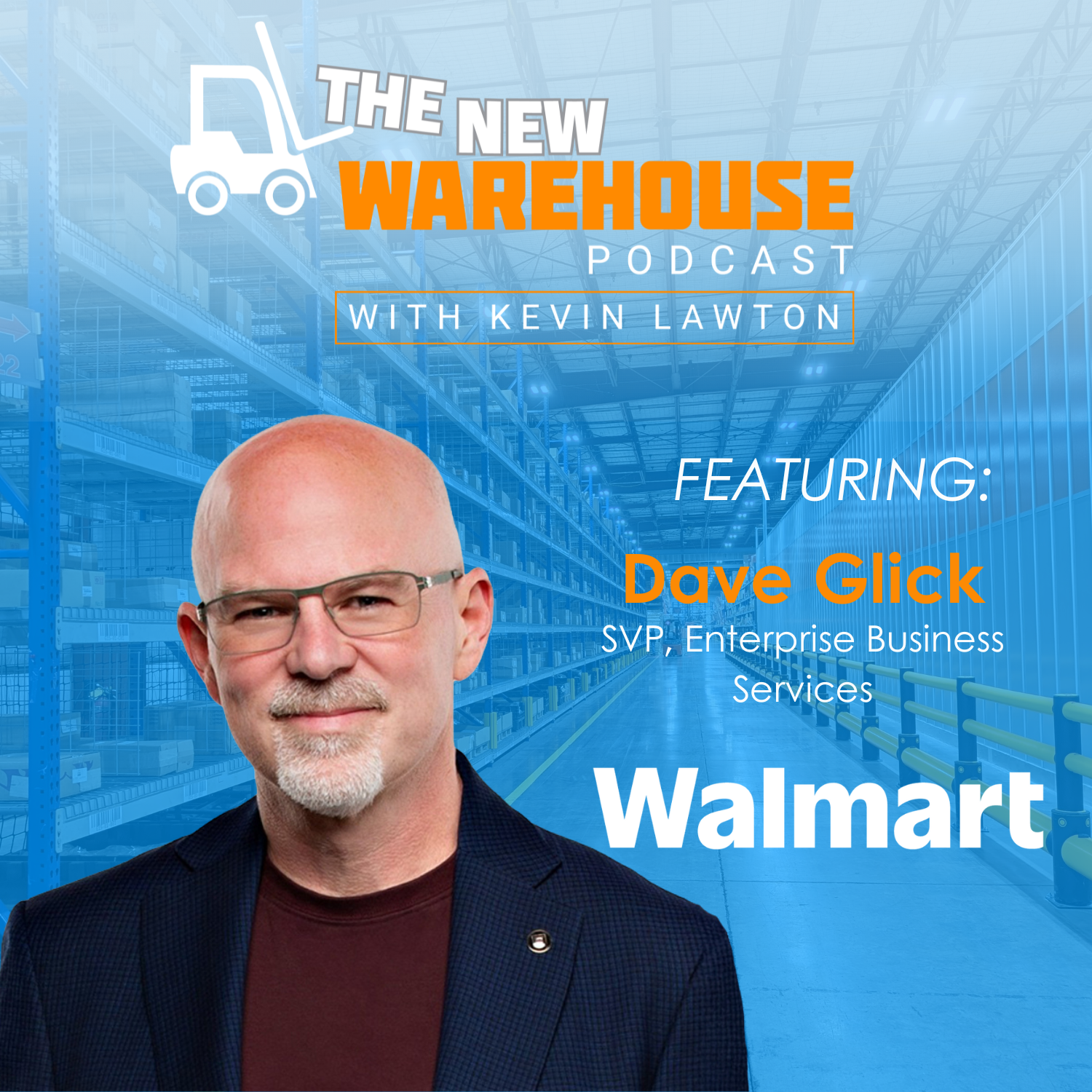
AI Adoption at Walmart: Putting AI in Employees’ Hands
Welcome back to The New Warehouse Podcast. In this episode, Kevin speaks with Dave Glick, Senior Vice President of Enterprise Business Services at Walmart. Glick oversees finance, technology, and operations, with a clear mandate centered on AI adoption in the enterprise.
The discussion explores how large organizations move from experimentation to real usage by putting AI directly into employees’ hands. Glick shares how access, leadership support, and cultural permission can turn AI into a daily tool rather than a side project, and highlights what it takes to manage change across a massive, complex organization.
Making AI a Daily Tool for Employees
AI adoption in the enterprise begins with clarity around who AI is really for. As Glick explains, “My main customer is associates. And so I’m in charge with putting AI in the hands of every corporate associate every day.” Instead of limiting AI to innovation teams, Walmart focused on widespread access. Engineers were encouraged to start building immediately, without rigid use cases. That early freedom shifted perceptions quickly. As Glick likes to say, “When you put customers and engineers close together, good things will happen.”
The takeaway is practical. When employees are permitted to experiment, adoption accelerates naturally. AI stops being theoretical and becomes embedded in everyday work.
Expanding AI Beyond Engineers
As tools improved, Walmart pushed AI adoption beyond technical teams. Glick describes a pivotal mindset shift: “What if you can make the customer into the engineer?” Coding agents allowed non-technical employees to build dashboards, validate data, and automate routine work. The result was immediate engagement. “People who’ve never coded before in their lives, we’ve put this tool in their hand and now they’re able to fish for themselves.”
Thousands of employees were trained, and roughly 50% became daily users. That level of adoption shows what happens when enterprise AI initiatives empower users instead of routing every request through engineering backlogs.
AI Adoption at Enterprise Scale
Technology alone does not guarantee AI adoption in the enterprise. Leadership and culture matter just as much. Glick reflects on a key realization: “Driving change across an organization, especially an organization this large, is a big challenge.” Momentum came from consistent leadership messaging and removing organizational barriers. Bringing everybody along and letting them build things makes it much easier to get people excited about AI. “Every time we allow them to spend time innovating, they come back, and they can’t believe what they were able to build.”
Glick stresses urgency as well: “If we don’t march forward, we’re gonna be left behind.” Legal, security, and compliance teams worked alongside engineers to enable progress without sacrificing standards. “We’re lucky to work at Walmart, where our outgoing and incoming CEO are totally dialed in on AI.” The lesson is clear. Enterprise AI adoption requires persistence, trust, and a willingness to let employees innovate once the roadblocks are gone.
Key Takeaways on AI Adoption
- AI adoption in the enterprise starts with access, not pilot programs.
- Empowering non-engineers dramatically increases engagement and speed.
- Repetition of leadership and permission reduces resistance to change.
- Removing blockers enables innovation without compromising compliance.
Listen to the episode and leave your thoughts in the comments.
Guest Information
For more information on Walmart, click here.
To connect with Dave Glick on LinkedIn, click here.
For more information about AI adoption, check out the podcasts below.
Warehouse Trends October 2025: Data Integration, AI Voice, and Brownfield Breakthroughs
Voice AI in Warehousing from aiOla
Live from WERC: Synkrato is Changing Warehousing from the Ground Up with AI